
Qi Gong isn’t just a practice; it’s more like a gentle journey where body and mind groove together. Originating in ancient China, Qi Gong blends effortless movements with mindful breathing and mental intentions. Imagine a routine that doesn’t just work your body but calms your thoughts, syncing inner and outer energies in a smooth, flowing movement.
The essence of Qi Gong lies in its core principles. The beauty of gentle movements is that they don’t demand too much physically, but mentally, they transform your awareness of which muscles are in action. Picture slow exercises where each breath and motion come together, pulling focus from everyday chaos to the serenity found in each stretch or turn.
Breathing isn’t just about inhalation and exhalation here; it becomes an art form. Focusing on each breath creates an energizing calm – your mind unravels, releasing stress and making space for clarity. The best part? Each breath works harmoniously with gentle movements or still postures to foster this incredible balance.
Many of these same mindfulness and awareness principles are also explored within my introduction to Emei Qigong.
My Introduction to Emei Qigong



The differences between these stances are subtle but important. In the video below, I explain why the first two collapse structure and how the third allows the body to settle naturally.
Qi Gong can assit with creating clear mental intentions, enabling you to direct your mind to a calm destination where peace and clarity rule. These aren’t just meditative thoughts; they guide you in finding that centered place within, a field for mental calmness and clarity.
When we talk mindfulness in Qi Gong, it’s those movements paired perfectly with breath that take the spotlight. Imagine a beautiful sequence, a flow that links your breath rhythm to slow, deliberate movements. There’s a blissful calm found in still meditations, standing or sitting, where every motionless moment deepens the mindfulness journey.
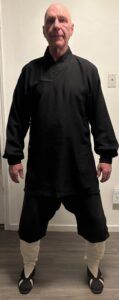

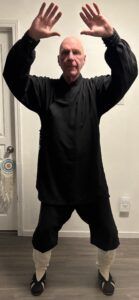
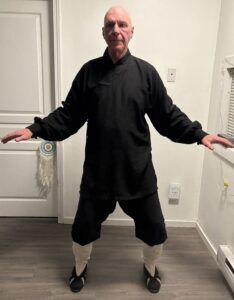

With each stance, begin by standing for about three minutes.
If you practice daily, after three days, add 15 seconds to each stance.
Gradually build until you reach five minutes per stance.
Releasing the Zhan Zhuang Posture
After standing for several minutes, the posture should dissolve slowly rather than ending abruptly.
First allow the knees and hips to soften, letting the body sink slightly deeper before rising. In many traditions this gentle lowering allows the accumulated tension from the stance to release naturally through the legs.
At the same time, the arms should not simply drop.
Instead:
• the elbows soften
• the forearms rotate slightly inward
• the arms draw gently toward the body
• the hands gradually settle
This movement closes the posture and allows the shoulders and chest to relax.
As the body sinks, many practitioners feel the weight settle into the Yongquan in the soles of the feet while the hips and Kua release.
This combination allows the tension gathered during Zhan Zhuang to disperse through the body and return to a natural state.
In my own training, my teacher and I often sink somewhat deeper before rising, which encourages a fuller release through the legs and hips.
Why This Matters
Standing meditation builds deep internal pressure through stillness.
Closing the posture properly allows that pressure to settle and integrate rather than remaining trapped in the joints.
Opening → Holding → Closing.
Each phase is part of the practice.
Shaking Off the Practice
After releasing the posture, it can be helpful to walk around for a few moments and gently shake the arms and legs.
Standing in Zhan Zhuang often creates deep internal tension in the muscles and connective tissue. When the stance ends, the body may feel heavy, warm, or even slightly unstable.
Many practitioners describe their arms and legs as feeling a bit like noodles.
Walking slowly and lightly shaking the limbs helps the body redistribute the tension that built up during the standing practice. This simple movement allows circulation to return naturally and helps the body settle into a relaxed state.
There is no special technique required.
Just walk calmly for a few moments, gently shaking the arms and legs until the body feels comfortable and balanced again.
Continuing the Journey
Standing meditation is simple in appearance but profound in its effects. With consistent daily practice, the body gradually becomes stronger, more relaxed, and more connected.
Mastering Qi Gong along with mindfulness can bring a sea change to your life. Stress? Managed, your body begins to understand how to lower those cortisol levels through regular practice. It’s like a secret recipe for emotional balance too, helping you to create coping tools to tackle anxiety and uplift your mood effortlessly.
The physical perks are just the beginning. Flexibility, balance, and even respiratory health get a massive boost. Starting Qi Gong doesn’t demand fancy equipment or hefty time investments. A few easy exercises for beginners can stitch neatly into your day, gradually building a comforting routine.
Consistency is key to embedding this magic into your everyday life; Establishing a daily morning or evening routine is key to evolving and enhancing your practice and experience. Also, finding time during your day to incorporte moments of focus physically by engagiing in short routines can be very rewarding. A quick Qi Gong session feels natural, whether that’s in the morning to set a calm tone for the day or unwinding in the evening. Motivation slips when expectations climb too high, so seize every little gain – each session is a reminder that you’re on this rewarding journey.
“Return to the moment. This is how Qi is cultivated.”
For those who wish to explore Zhan Zhuang more deeply, Master Lam Kam Chuen’s book The Way of Energy offers a complete and traditional guide to the practice.
This way of approaching practice is something I continue to deepen through my studies with the Tai Chi, Qigong & Feng Shui Institute, where Qigong is not treated as an addition—but as the foundation. https://taichi18.com/?ref=4638
There are also deeper internal aspects of training, sometimes referred to as Neikung, which point toward a more refined level of awareness beyond what is outwardly seen. Refer to Home.
Home
Further Study in Traditional Qigong
For those who feel drawn to structured, lineage-based internal training, Emei Qigong Harmony offers a complete system rooted in the teachings of Mount Emei.
Their approach includes standing practice, guided meditations, and sound-based healing methods designed to build internal energy and calm the nervous system over time.
You can explore their training here:
Your Healing Journey Starts Here | Referred by Bryce Van Aker
Join the TaijiPulse Circle
Receive quiet reflections on Qigong, breath, and steady cultivation.
No noise. Just simple practices to return to.