
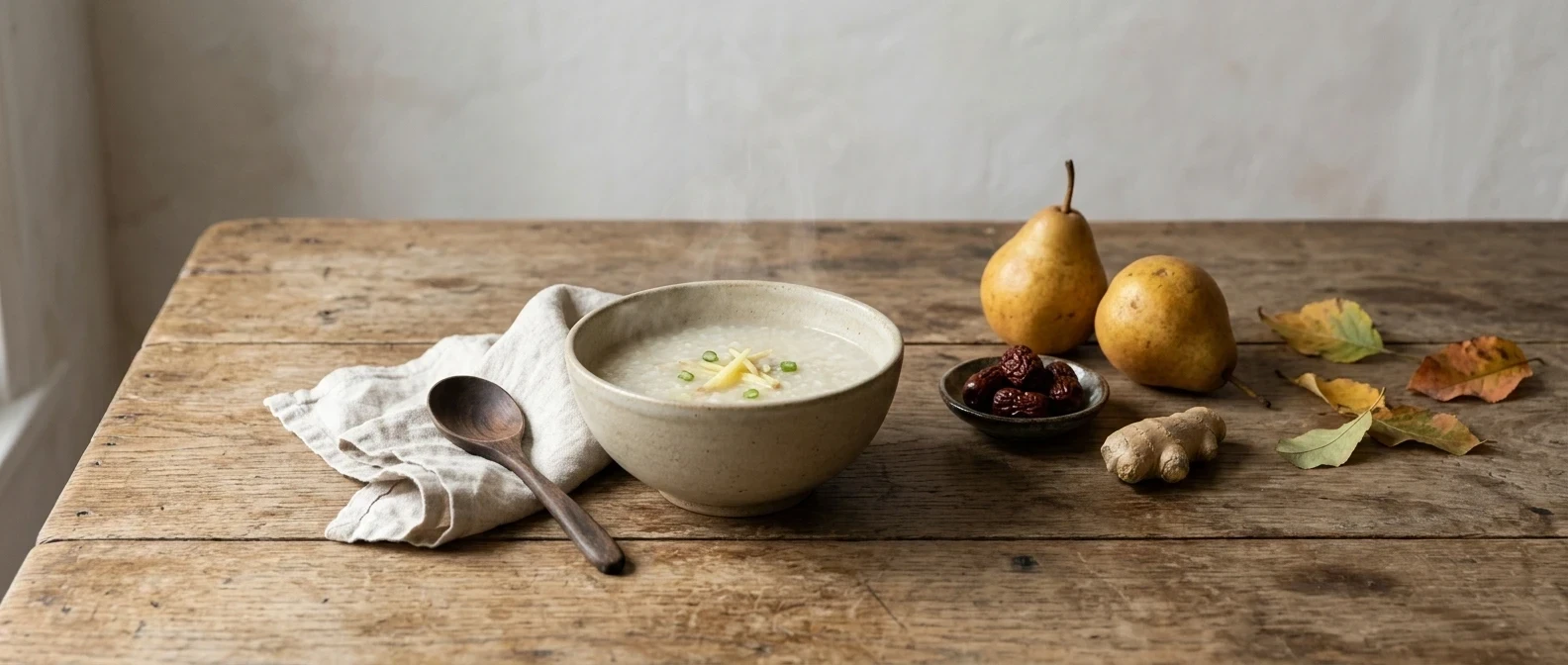
Many people come to Qigong for the movement and only later notice that the tradition has opinions about food too. In classical Chinese thinking, how you move, breathe, sleep and eat were treated as parts of one way of living, and all of them were meant to shift with the time of year. This article is about seasonal eating for Qigong practitioners, written for beginners and for anyone whose joints feel stiffer than they used to.
Treat what follows as a set of old ideas to try gently. It is not a diet, and it does not treat any condition. Where the tradition says something, the article says it is the tradition speaking. Where modern research has something to add, or nothing to add, it says that as well.
Why the Tradition Pairs What You Eat With How You Move
Qigong is usually translated as “energy work” or “breath work,” but the practice is closer to a daily habit of paying attention. You stand, breathe, move slowly and notice how your body responds. Eating can be done the same way, and the old texts treat the two as neighbors.
The reasoning is simple. If your practice asks you to slow down and feel your body, a heavy or rushed meal tends to get in the way. A cold, raw lunch in midwinter or a large greasy dinner before an evening session can change how the practice feels, and you can check this for yourself without believing anything on trust.
The tradition adds a second idea: the body is not meant to behave the same way in January as in July. Daylight, temperature and appetite all change, and the old advice was to change food and effort along with them.
What Traditional Chinese Dietary Thinking Actually Says About the Seasons
The best-known source is the Huangdi Neijing (the Yellow Emperor’s Inner Classic), a medical text compiled in China over many centuries. An early chapter, often titled in English as being about regulating the spirit in accordance with the four seasons, advises living in step with each season. A common summary is that spring and summer are times to nurture growth and outward activity, while autumn and winter are times to gather in and conserve.
Later writers built on this using the five phases (also called the five elements). In that scheme each season, and sometimes a fifth “late summer” or “long summer” between summer and autumn, is linked to an organ system, a flavor and a quality of food. Spring is linked with the Liver and a sour flavor, summer with the Heart and bitter, late summer with the Spleen and sweet, autumn with the Lung and pungent, and winter with the Kidney and salty.
Two cautions apply here. These organ names refer to functional systems in Chinese medicine, not to the organs as a modern anatomist describes them. And different teachers and books arrange the details differently, so expect disagreement between sources.
Modern English-language introductions include Bob Flaws, The Tao of Healthy Eating, Paul Pitchford, Healing with Whole Foods, and Giovanni Maciocia, The Foundations of Chinese Medicine. They are worth reading, and also worth reading critically, since each reflects its author’s lineage and emphasis.
Spring and Summer: Lighter Food and Lighter Practice
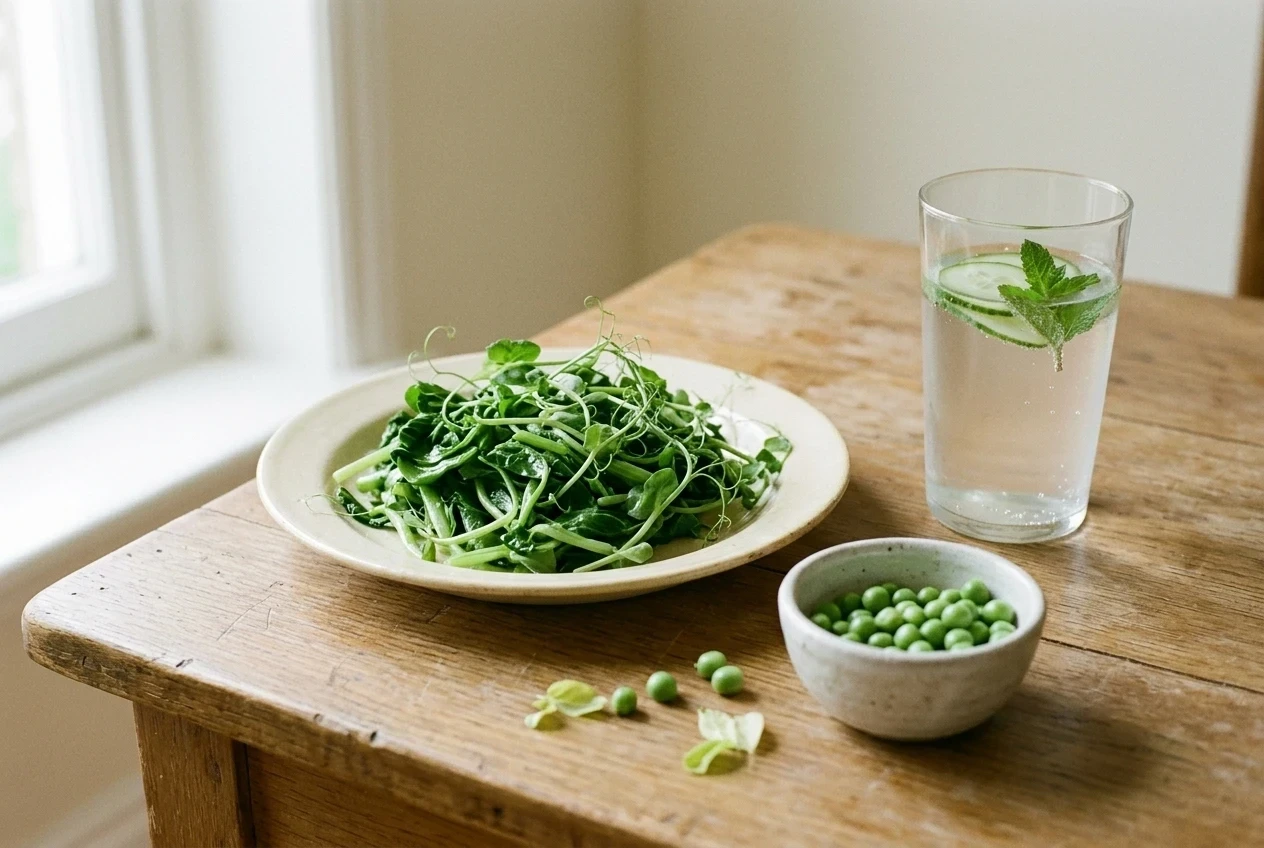
In the tradition, spring is the season of rising and opening. Food choices that follow from this are lighter, with fresh young greens, spring onions, sprouts, herbs and lightly cooked vegetables. Heavy, deep-fried or very rich meals are said to sit badly with the season. A sour note, such as a squeeze of lemon or a little vinegar on a salad, fits the spring association.
Practice follows the same direction. Many teachers suggest spring is a good time for movements that lift and open, such as raising the arms, gentle side stretches and unhurried turning of the waist. If your joints are stiff after a cold winter, give yourself a few extra minutes of warm-up before anything that asks for range.
Summer is the most outward season, linked to the Heart and a bitter flavor. Practical translations include cucumber, leafy salads, tomatoes, berries, mung beans and a cup of mint or green tea. Several traditional sources also advise against living on iced drinks, even in hot weather, because very cold food is said to tax digestion. That is a folk teaching, and your own comfort is a fair test of it.
For summer practice, the sensible advice is to train in the cooler part of the day, drink enough water and choose slower, shorter sessions when it is hot. That last point needs no tradition behind it.
Late Summer and Autumn: Grounding Meals for a Settling Body
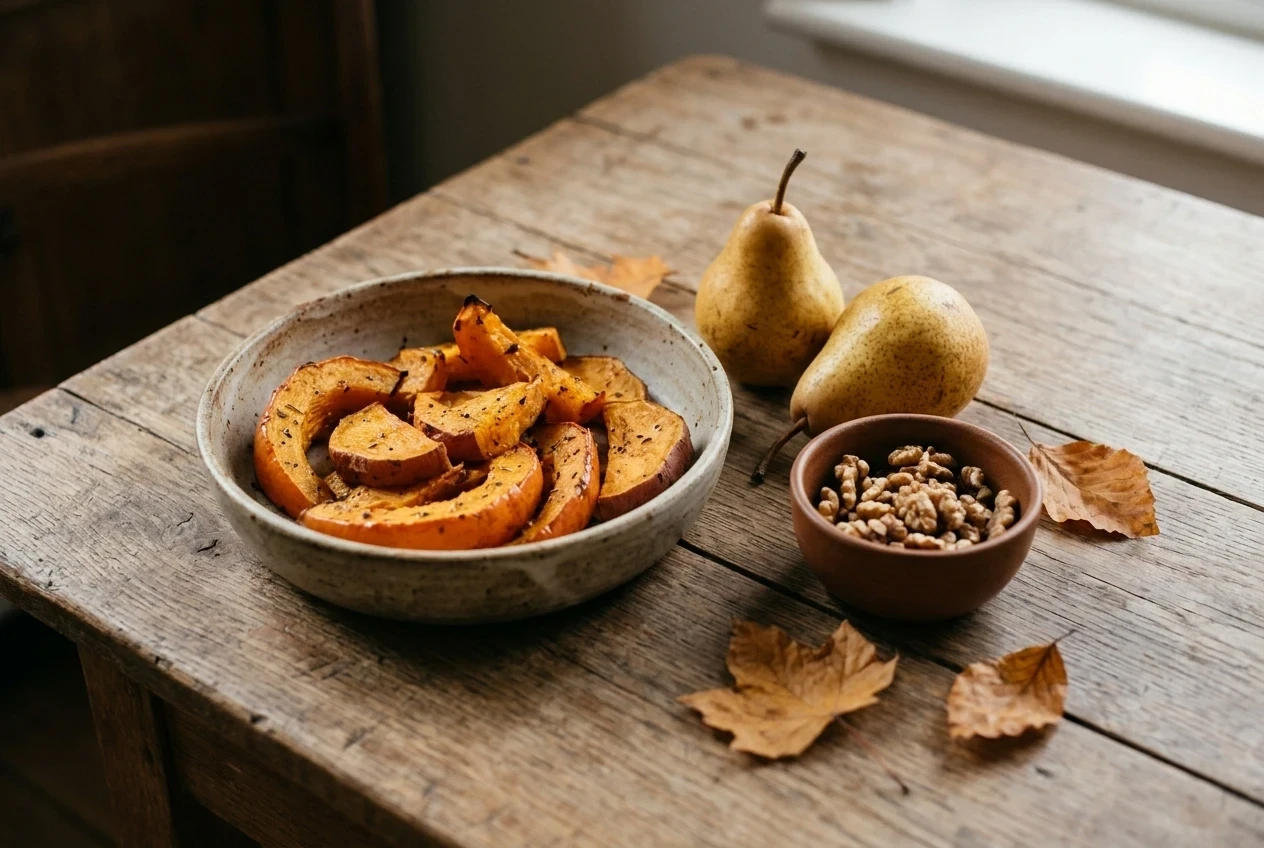
Late summer is the pause before the year turns, and in five-phase thinking it belongs to the Spleen and Stomach, the digestive center. The sweet flavor here means naturally sweet, starchy foods, not sugar. Think pumpkin, sweet potato, carrot, corn, millet and cooked rice.
Practice in this stretch tends toward grounding. Standing practice suits it well, where you stand with soft knees and let your weight settle through your feet. If that is new to you, Zhan Zhuang for Beginners: Standing Like a Tree walks through the basics at an easy pace.
Autumn, as of this writing in the northern hemisphere, is linked to the Lung and to dryness. Traditional advice leans toward moistening foods: pears (often poached or stewed), rice porridge, cooked apples, white fungus soup, sesame seeds and a little onion or ginger. The tradition also recommends warming foods more as the weather cools.
Autumn is a natural time to give more attention to the breath. A slow, even exhale at the end of each movement is enough to begin with. If you want a clear explanation of breathing from the abdomen, How to Breathe in Taiji Quan: Abdominal Breathing for Beginners covers it step by step.
If you live in the southern hemisphere, shift all of this by six months and follow your own weather, since the tradition is really about local conditions.
Winter: Warm, Slow-Cooked Food and Quieter Qigong
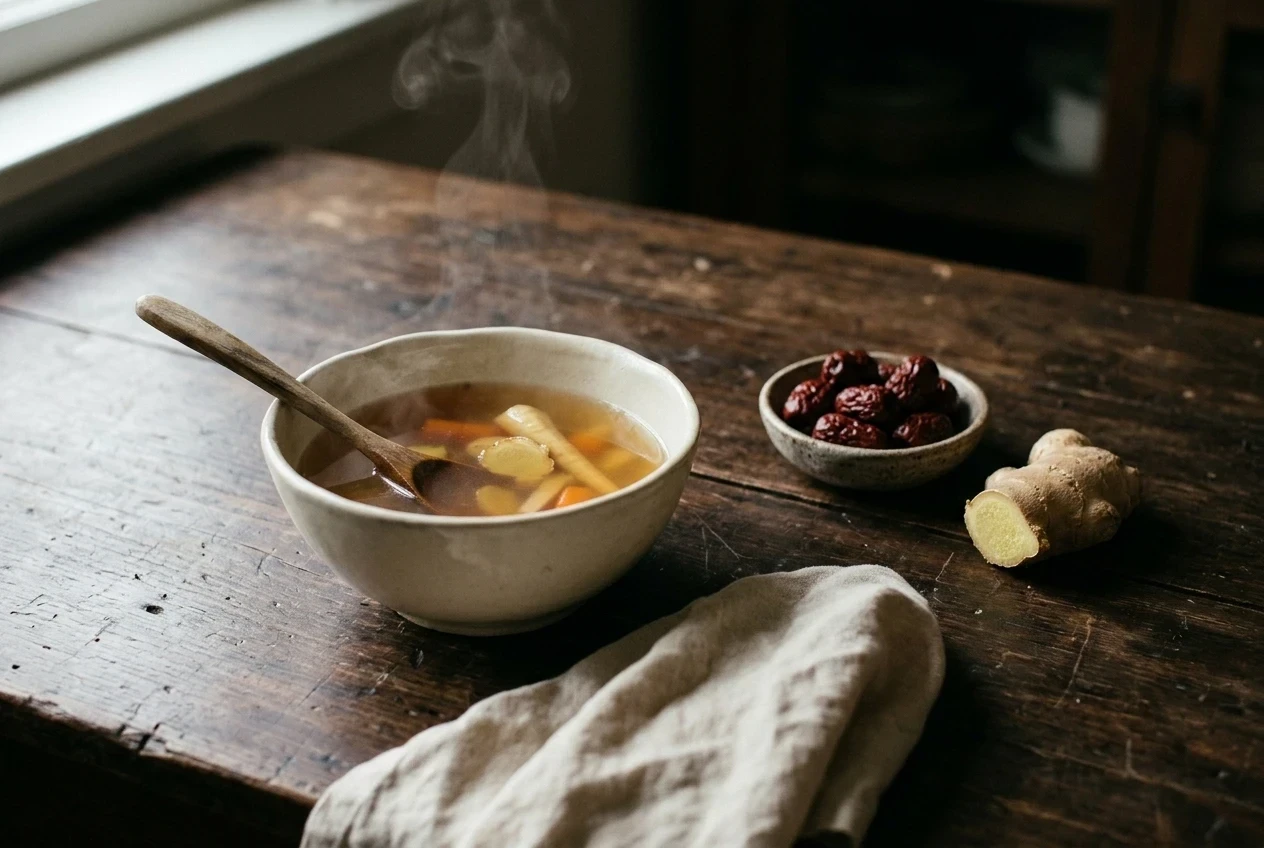
Winter is the season of storing, linked to the Kidney and the salty flavor. The old advice is for warm, cooked food: soups, stews, congee, root vegetables, beans, and warming seasonings such as ginger and scallion. Black foods like black beans and black sesame are traditionally associated with winter. Salt is meant in a modest sense, and anyone told to limit sodium should follow that advice before any tradition.
There is also a link to stiff joints worth mentioning carefully. Classical Chinese medicine describes aching, heavy joints as being worsened by cold and damp, and the traditional response is to keep the body warm and favor cooked food over cold, raw food. Whether diet changes joint pain is not something this tradition has been tested on in a rigorous way. What can be said is that a warm bowl of soup before a morning session is pleasant, and feeling warm and loose tends to make gentle movement easier.
Winter practice in the old texts is quieter and more inward. In practical terms that can mean shorter sessions, more time spent warming up, and more standing or seated breathing and less large movement. Afterward, a few minutes of rest matters; How to Relax After Qigong Practice (Why It Matters) explains why.
What the Tradition Can and Cannot Promise (and Where to Check the Sources)
The seasonal eating framework comes from a tradition, and the honest position is that it has not been confirmed as a system by modern clinical trials. The claims about which food strengthens which organ, or which flavor suits which month, are part of Chinese medical theory. They have not been tested in a way that would let anyone promise a health outcome from them.
Some separate points do have modern backing. Dietary guidance from public health bodies consistently encourages more vegetables, fruit, whole grains and legumes, and many seasonal choices in this article fall within that. For the movement side, the US National Center for Complementary and Integrative Health (NCCIH) publishes plain-language summaries of the research on tai chi and Qigong, including where the evidence is encouraging, for example in balance and in knee osteoarthritis pain, and where it is limited. Read those pages directly rather than relying on a summary from a blog, this one included.
A few practical safeguards are worth stating plainly:
- If you have diabetes, kidney disease, gout, a digestive condition, or you take medication, ask your doctor or a registered dietitian before changing how you eat.
- Ginger, herbs and teas can interact with some medications, so mention them to your pharmacist.
- Treat persistent joint pain, swelling or sudden changes as something to have examined, not something to manage with food alone.
- If a book or teacher promises that seasonal food will cure an illness, that is a reason for caution.
Used this way, the tradition is a framework for attention. It gives you a reason to notice the weather, what is growing nearby and how your body feels after a meal and after practice.
A Simple Way to Start: Matching One Meal and One Short Practice to the Season
Changing everything at once rarely lasts, so start with one meal and one short practice. Choose the meal you tend to eat least thoughtfully, perhaps lunch, and the time of day you are most likely to stand still for a few minutes.
- Look at what is in season near you. A local market, a farm stand or the produce aisle will show you. In autumn that might be pears, squash, apples and root vegetables.
- Choose one food and cook it simply. A baked squash, a pot of rice porridge or poached pears needs few ingredients and little skill.
- Eat it without a screen. Put the fork down between bites. Notice temperature, texture and how full you feel.
- Follow the meal with five quiet minutes. Stand with feet about shoulder-width apart, knees soft, and breathe slowly. If standing is uncomfortable, sit at the front of a chair with your back upright.
- Notice how you feel. Write one line afterward. A week of notes will tell you more than any chart of foods and organs.
If the practice leaves you stiff or sore, shorten it or do it seated. Qigong rewards patience, and the same is true of changing what you eat.
Try one thing this week: pick a single seasonal food that is in your market right now, eat it slowly, and follow it with five minutes of quiet standing or gentle Qigong breathing, noting how you feel.