
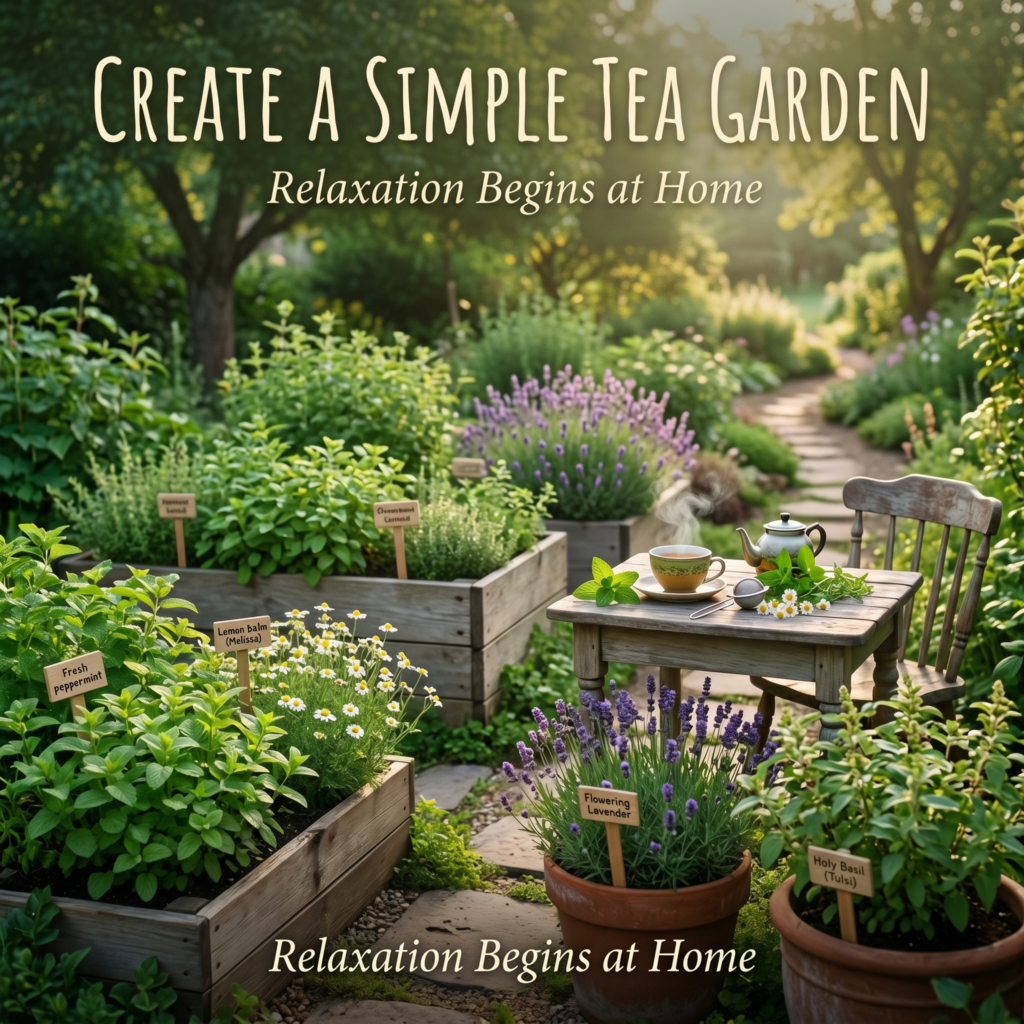
Creating a Simple Tea Garden for Relaxation and Reflection
Many people think of a tea garden as a collection of herbs. I have come to see it as something more.
A tea garden can become a place to practice presence.
Whether harvesting a few leaves of mint, tending a patch of chamomile, or preparing a simple cup of tea, these small acts invite us to slow down and return to the moment.
For centuries, tea and herbs have been woven into daily life, not only for their flavor but also for the quiet rituals they inspire. Creating a simple tea garden allows us to bring those moments closer to home.
Whether you have a large backyard, a small patio, or a sunny balcony, a few carefully chosen herbs can provide fresh ingredients for tea while creating a peaceful space for reflection, stillness, and cultivation.
Why Grow a Tea Garden?
One of the greatest benefits of growing your own tea herbs is the connection it creates between the garden and daily life.
Instead of opening a box or package, you can step outside, harvest a few leaves, and prepare a fresh cup of tea. The process itself becomes part of the experience.
Many gardeners find that tending herbs encourages them to slow down, observe the seasons, and appreciate simple routines.
A tea garden is not just about the plants.
It is also about creating moments of stillness.
Five Easy Herbs for a Beginner Tea Garden
Lemon Balm
Lemon balm is one of the easiest herbs to grow and is known for its fresh citrus fragrance.
The leaves make a pleasant tea and the plant grows vigorously in many climates.
Peppermint
Peppermint is a classic tea herb that is refreshing and easy to maintain.
Because mint spreads quickly, many gardeners prefer growing it in containers.
Chamomile
Chamomile produces delicate flowers that can be harvested and dried for tea.
Its cheerful blossoms also attract pollinators to the garden.
Lavender
Lavender adds beauty, fragrance, and a unique flavor when used sparingly in tea blends.
Its purple flowers create visual interest throughout the growing season.
Holy Basil (Tulsi)
Tulsi has been valued for centuries and produces aromatic leaves that make a flavorful herbal tea.
It also adds variety and texture to the tea garden.
Creating a Relaxing Garden Space
A tea garden does not need to be large.
Even a few containers arranged around a chair or small bench can create a peaceful retreat.
Consider adding:
- A comfortable place to sit
- Natural stone or wood accents
- A simple pathway
- Bird-friendly plants
- A small water feature if space allows
The goal is not perfection.
The goal is to create a space that encourages you to pause for a few moments each day.
From Garden to Cup
One of the most satisfying aspects of a tea garden is preparing tea from herbs you have grown yourself.
Fresh leaves can be harvested as needed during the growing season. Some herbs can also be dried and stored for use throughout the year.
The process of harvesting, preparing, and enjoying tea naturally encourages mindfulness.
It invites us to slow down and appreciate the simple gifts of nature.
Food, Herbs, and Daily Well-Being
Many traditional cultures viewed the garden as more than a source of food. Herbs and vegetables were often grown not only for flavor, but also to support daily well-being.
A cup of mint tea after a meal, chamomile before rest, or lemon balm during a busy day are simple examples of how plants have long been woven into everyday life.
While herbs are not a substitute for professional medical care, growing and using them can encourage a closer relationship with the natural world and the rhythms of the seasons.
The garden becomes more than a place to grow plants. It becomes a place to cultivate awareness, appreciation, and balance.
A Practice of Presence
In Qigong, we often speak about returning to the present moment.
Gardening offers a similar opportunity.
When tending herbs, feeling the soil, harvesting leaves, or enjoying a warm cup of tea, attention naturally returns to what is happening right now.
A tea garden may begin with a few plants, but over time it can become something more—a place for relaxation, reflection, and quiet appreciation of the natural world.
Perhaps that is one of the greatest gifts a garden can offer.
Over time, the garden itself becomes a teacher. The herbs grow according to the seasons. Some flourish quickly, while others require patience. By tending them, we are reminded that growth cannot be rushed. The same is true of Qigong practice and many other aspects of life.
Return to the moment. This is how Qi is cultivated.
https://www.richters.com/?source=afl_a1bc
Join the TaijiPulse Circle
Receive quiet reflections on Qigong, breath, and steady cultivation.
No noise. Just simple practices to return to.
Join the TaijiPulse Circle
Receive quiet reflections on Qigong, Taiji, and the art of standing rooted in a moving world.Enter the Circle