
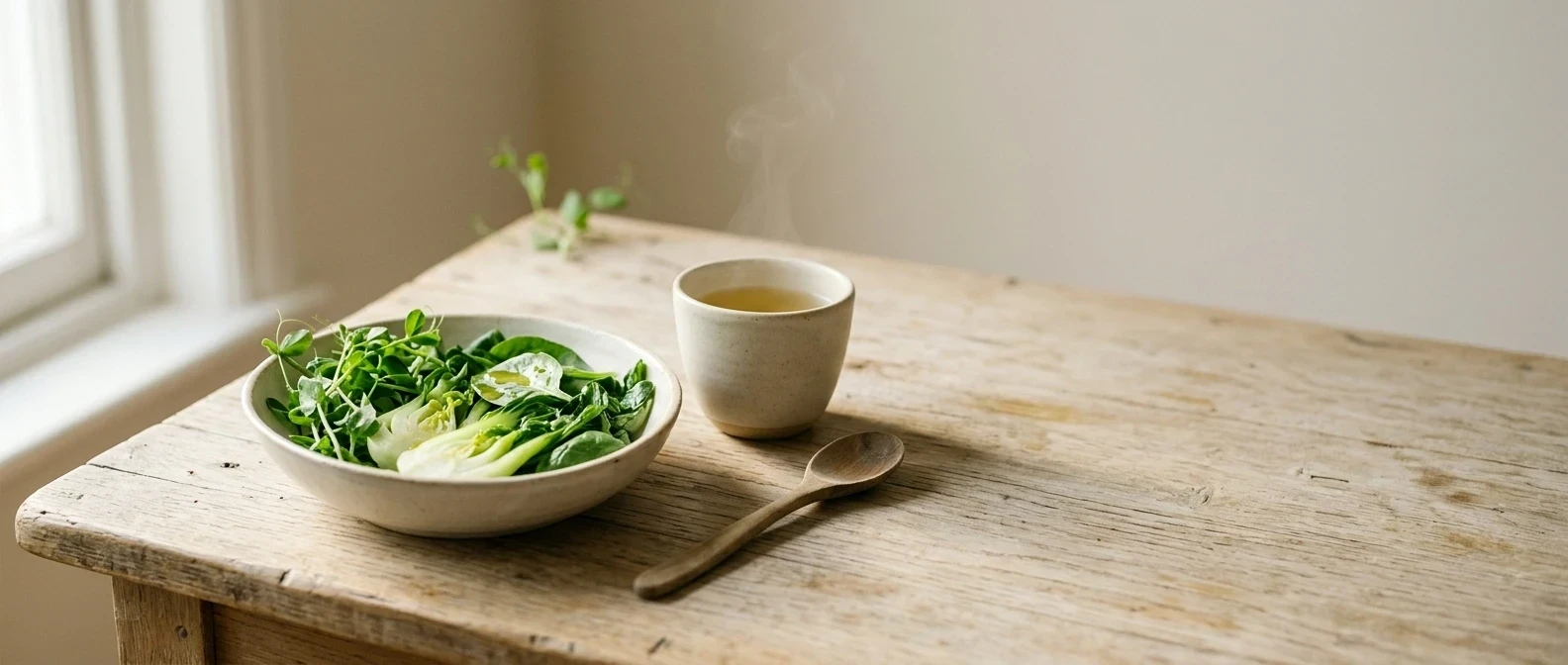
Winter food tends to be heavy and warming: stews, roasted roots, porridge with butter, soup that simmers all afternoon. It suits the cold months. By the time the days lengthen, though, the same bowl can start to feel like too much, and a lot of people describe a slow, heavy, stiff feeling as the season turns. If you are wondering what to eat in spring for more energy, the answer is a gradual lightening of what you already cook, with no overhaul.
This article covers only that handover from winter eating to spring eating. It draws on the traditional Chinese view of the seasons, offered as a tradition worth trying gently, not as medical fact.
Why spring can feel sluggish, and what traditional Chinese thought says is rising
There are plain, ordinary reasons to feel slow at the end of winter: less daylight and movement over the months before, heavier meals, and joints that spent weeks stiffened by cold. Nothing in this article replaces those explanations.
Traditional Chinese thought adds a different frame. The Huangdi Neijing (the Yellow Emperor’s Inner Classic), a foundational text of Chinese medicine, has a chapter on living in harmony with the four seasons. It describes spring as a time of opening and new growth, and it advises rising early and walking about in a relaxed way instead of staying shut in. Later teaching links spring with the Wood element and with the Liver, and with energy that moves upward and outward like a shoot pushing through soil.
You do not need to accept the whole system to find the image useful. If spring is the season of upward, spreading movement, then the practical question is what you can do to let your meals and your movement lean in that direction instead of staying settled and heavy.
For a broader introduction to how Qigong practitioners think about food across all four seasons, eating with the seasons when you practice Qigong is a good companion to this piece.
Easing out of winter food without swinging to the other extreme
The common mistake at the first warm day is to jump from slow-cooked stew to cold raw salad. Traditional Chinese dietary teaching generally favours gradual change, and the body tends to cope better with a slope than a cliff. Raw, cold food is also the sort that people with stiff joints often find uncomfortable in the early weeks of spring, when mornings are still cool.
A gentler way to make the change:
- Shorten the cooking time. A stew that simmered for three hours in January can become a soup that simmers for forty minutes, with the vegetables added near the end.
- Use less oil and fewer heavy sauces. Keep the flavour, but cut back on the richness.
- Make the portions of dense food a little smaller. A smaller scoop of roasted root vegetables or a thinner layer of cheese, with more green beside it.
- Change one meal at a time. Lunch is often the easiest place to start, because it sits between a light breakfast and a heavier dinner.
Keep eating warm food. Spring eating in this tradition is lighter, not colder.
Young greens and a few pungent flavours: what to add and why
Traditional Chinese dietary writing is fairly consistent about spring: favour young, tender, fresh growth and add a little of the pungent flavour that is described as dispersing and moving. Paul Pitchford’s Healing with Whole Foods, a widely read English-language introduction to Chinese food energetics, gives spring guidance along these lines, including young greens, sprouts and lighter cooking methods. The reasoning there is symbolic and traditional. It is not drawn from clinical trials, so treat it as a framework to experiment with.
Young greens to look for
Whatever is fresh and tender where you live is the right choice. Common examples include:
- Spinach, watercress and rocket
- Pea shoots and young pea pods
- Asparagus
- Dandelion leaves, where you can get them clean and unsprayed
- Mustard greens and tender kale
- Chives and spring onions
Cook them lightly. A minute or two in a hot pan with a little oil, or a short steam, is enough. They should stay bright green.
A few pungent flavours
Pungent here means the sharp, aromatic quality of fresh ginger, spring onion, radish, mint and a little black pepper. Use small amounts: a thin slice of ginger in a soup, spring onion over rice or eggs, a few radish slices beside a meal.
Some traditions also pair spring with a touch of sour, such as a squeeze of lemon or a splash of rice vinegar over greens. It also brightens the taste of the greens, which is a good practical reason to try it.
Ginger and pepper can be too much for some stomachs, so begin with a pinch and see how you feel.
Keeping some warmth in the bowl for joints that still feel the cold
Spring is not summer. In many places the mornings stay cold for weeks, and stiff or achy joints often notice it before anything else does. Nothing in the spring approach asks you to give up warmth.
Some ways to keep it:
- Have soup or congee (a soft rice porridge) at breakfast, with a few greens stirred in at the end.
- Drink warm water or a mild herbal tea instead of iced drinks.
- Keep a little cooked, warming food in each meal, such as rice, a soft-cooked egg or a small portion of roasted vegetables, next to the fresh greens.
- Use ginger, which sits in both camps: it is warming and pungent, so it works across the change of season.
If you want to see how that winter side is built, warming foods for stiff winter joints sets out the heavier end of the spectrum. Spring eating is the same bowl with more green and less weight.
Water matters as well, since many people drink less in cool weather. The Qigong view of moving fluid is covered in why water matters for stiff joints, if you want a deeper look.
What food cannot do: honest limits and where to read further
Food supports how you feel day to day. It does not treat arthritis, fatigue that has a medical cause, or any other condition. Health organisations such as the NHS and the Arthritis Foundation both note that no single food or special diet cures arthritis, and that eating a varied, balanced diet is the general recommendation. If your tiredness is heavy, lasting or new, or your joints are swollen, hot or getting worse, speak to your doctor before changing anything.
The seasonal framework here comes from a tradition that is centuries old, and its explanations (Wood, Liver, rising energy) belong to traditional Chinese medicine’s own way of describing the body. They are not findings from modern clinical research. They are offered as a way to pay attention to your meals and your own response, so the useful test is how you feel after trying a change for a couple of weeks.
If you would like to read further, Healing with Whole Foods by Paul Pitchford is a thorough reference on food energetics and has a long section on seasonal eating. It is a large book, so dip into it by season instead of reading it from the front. It is an optional extra; nothing in this article depends on it.
A small spring week: three simple meals and a few minutes of Qigong to pair them with
This is a sketch to adapt, not a plan to follow strictly. Each meal changes one thing and is paired with a short Qigong practice.
Meal one: a soft, warm breakfast with a green
Cook oats or rice congee as you normally would. In the last minute, stir in a handful of chopped spinach or pea shoots and a few thin slices of spring onion. Add a little grated fresh ginger if your stomach likes it.
Pair it with: two minutes of standing with your feet hip-width apart and knees slightly soft. Breathe slowly through the nose and let your shoulders drop.
Meal two: a lighter lunch soup
Make a clear broth with a few slices of ginger. Add tofu or shredded cooked chicken, then drop in watercress, chives or asparagus pieces for the last two minutes. Finish with a few drops of rice vinegar or lemon if you like the sour note.
Pair it with: a short walk afterwards, unhurried, in the open air if you can, in the spirit of the Neijing‘s advice to move about in a relaxed way in spring.
Meal three: a plain, tidy dinner
Steam a piece of fish or soft-cook some eggs. Serve with rice and a pan of lightly cooked greens, such as mustard greens or tender kale, with a few radish slices on the side. Keep the portion of rice or roasted vegetables smaller than you would in January, but still warm.
Pair it with: a few minutes of the arm movement described below, taken after you have rested from the meal.
The easy upward Qigong movement
- Stand with your feet about hip-width apart, knees soft, arms hanging loosely.
- As you breathe in slowly, let your hands rise in front of you, palms facing up, as though they were floating on water. Stop at chest height or wherever is comfortable.
- As you breathe out, turn the palms down and let the arms sink back to your sides.
- Repeat slowly, eight to ten times. Let the breath set the pace.
If standing is difficult, do the same movement seated. Stay within a range that causes no pain, and stop if anything hurts. If you want to understand the breathing underneath, how to breathe in Taiji Quan explains the abdominal breath for beginners.
One thing to try this week
Choose one meal and add a handful of lightly cooked young greens to it: spinach, pea shoots, watercress or whatever is tender and fresh near you. Cook them for a minute or two, keep them bright, and eat them with something warm.
Afterwards, spend two minutes on the slow, upward-floating arm movement above: arms rising with the in-breath, sinking with the out-breath. Then notice, without judging, how you feel in the hours that follow. If you keep that small habit for a week or two, you will have a clearer sense of whether the spring approach suits you than any list of rules could give.