
If you are searching for the best shoes for tai chi beginners, the useful question is not which brand or style to buy. It is whether a shoe lets your foot feel the floor while staying kind to stiff or achy joints. Taiji Quan is practised slowly, with attention on where your weight sits and how it moves. Your feet are the part of you doing most of that listening.
A shoe that hides the floor from your feet makes the practice harder to read. A shoe that squeezes your toes or tilts you forward makes it harder to enjoy. This guide covers what to look for, how to check it at home, and when to ask someone with more training than a buying guide can offer.
Why your shoes change what your feet can tell you
The soles of your feet contain a great many nerve endings, and in Taiji you use them constantly. You notice whether your weight is on the heel or the ball of the foot, whether the inside edge is pressing down, whether one foot is carrying more than the other. A thick, springy or stiff sole puts material between you and that information. You still stand, but you feel less of what you are standing on.
There is also a joint side to the question. Stiff ankles, achy knees and sore hips all respond to how your foot meets the ground. A shoe with a raised heel shifts your weight forward. A narrow toe box crowds your toes so they cannot spread to steady you. A heavy shoe asks your leg to lift more weight with every slow step.
So the aim is a shoe that is quiet: flat, flexible, roomy and light. It should add protection from the ground without adding opinions about how you should stand.
Start at home: what bare feet and socks show you before you buy anything
You do not need to buy anything before your first session. Bare feet or socks are a fine place to start, and they give you a baseline to compare shoes against later.
Stand on a floor you are comfortable on, with your feet about hip-width apart. Spend a minute noticing what your feet report. Where does your weight seem to sit? Do your toes grip, or do they rest? Does one foot feel more present than the other?
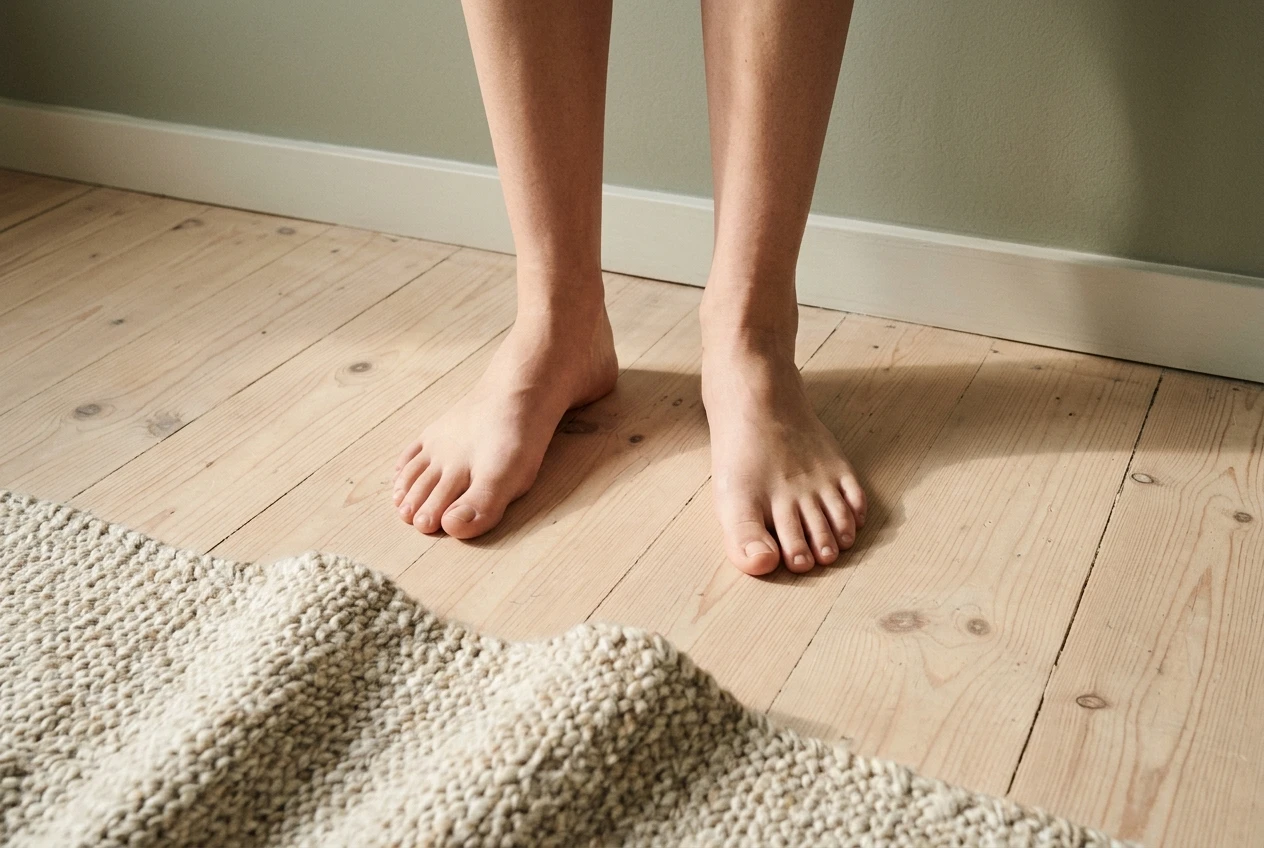
Then shift your weight slowly from one foot to the other and back. Notice how each foot responds as it takes on more load and as it lightens. Some people find this easy to feel. Others feel very little at first, and that is a normal starting point. Sensation in the feet often becomes clearer with attention over weeks.
A few practical points for practising barefoot or in socks:
- Smooth floors can be slippery in socks. If you feel your foot sliding, go barefoot, or use socks with a grippy sole.
- A cold floor can make joints feel stiffer. A warm room or a rug underfoot is a reasonable adjustment.
- If bare feet are uncomfortable because of pain, a skin condition, numbness or any health issue, skip this and talk to a foot professional before deciding what to wear.
Whatever you notice here is your reference. When you try a shoe later, you are asking how much of this information it keeps.
Five things to check in a Taiji shoe
Shoes made for Taiji and similar practices often share a simple design, but you can apply the same checks to any shoe you already own or find in an ordinary shop.
1. The sole: flat and thin enough to feel the floor
Press your thumb into the sole from the inside of the shoe. You should feel the ground a little, not a cushion of foam. Look at the shoe from the side: the sole should sit level, without a rocker curve at the toe or a wedge under the heel. A thin sole that still has some grip is the target. Check that the underside has a textured pattern, since a smooth sole can slide on polished floors.
2. Flexibility: it bends where your foot bends
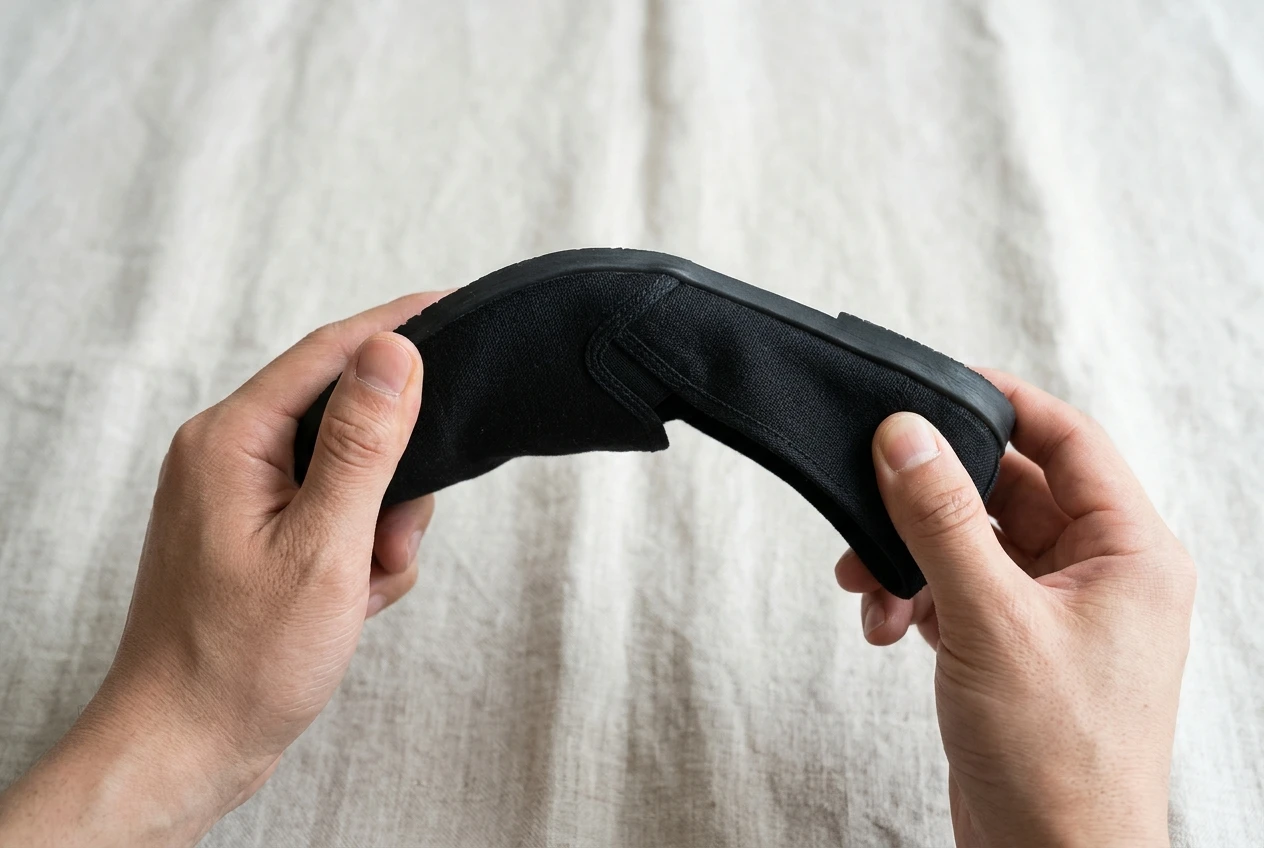
Hold the shoe by the heel and toe and bend it. It should fold easily at the ball of the foot, where your toes join the rest of the foot. Now twist it gently. A shoe that resists both movements will resist your foot, too. In Taiji you roll through the foot during each step, and a stiff shoe makes that roll feel like pushing a door closed.
3. Toe room: space to spread
Stand in the shoes and look down. Your toes should be able to lift, spread and settle flat without touching the sides. Wiggle them. If you can’t, the shoe is too narrow for this practice, however comfortable it feels for walking. Allow for feet that are slightly larger at the end of the day, and for any swelling or bunions you already know about.
4. The heel: low, level and secure
A flat heel lets your weight sit evenly instead of drifting toward your toes. The heel should also hold your foot without slipping. If your heel lifts as you step, the shoe will make you grip with your toes to keep it on. Laces, a strap or a snug heel cup all help.
5. Weight: light in the hand and on the foot
Pick the shoe up. It should feel light enough that you barely register it. A light upper in a breathable material also keeps your feet from overheating during a long session, and soft materials are less likely to rub sore spots.
A two-minute test you can do in the shop or at the front door
You can run this test with a pair in the shop, or with the shoes you already own standing at your front door. Hold a wall, chair or door frame nearby if your balance is uncertain.
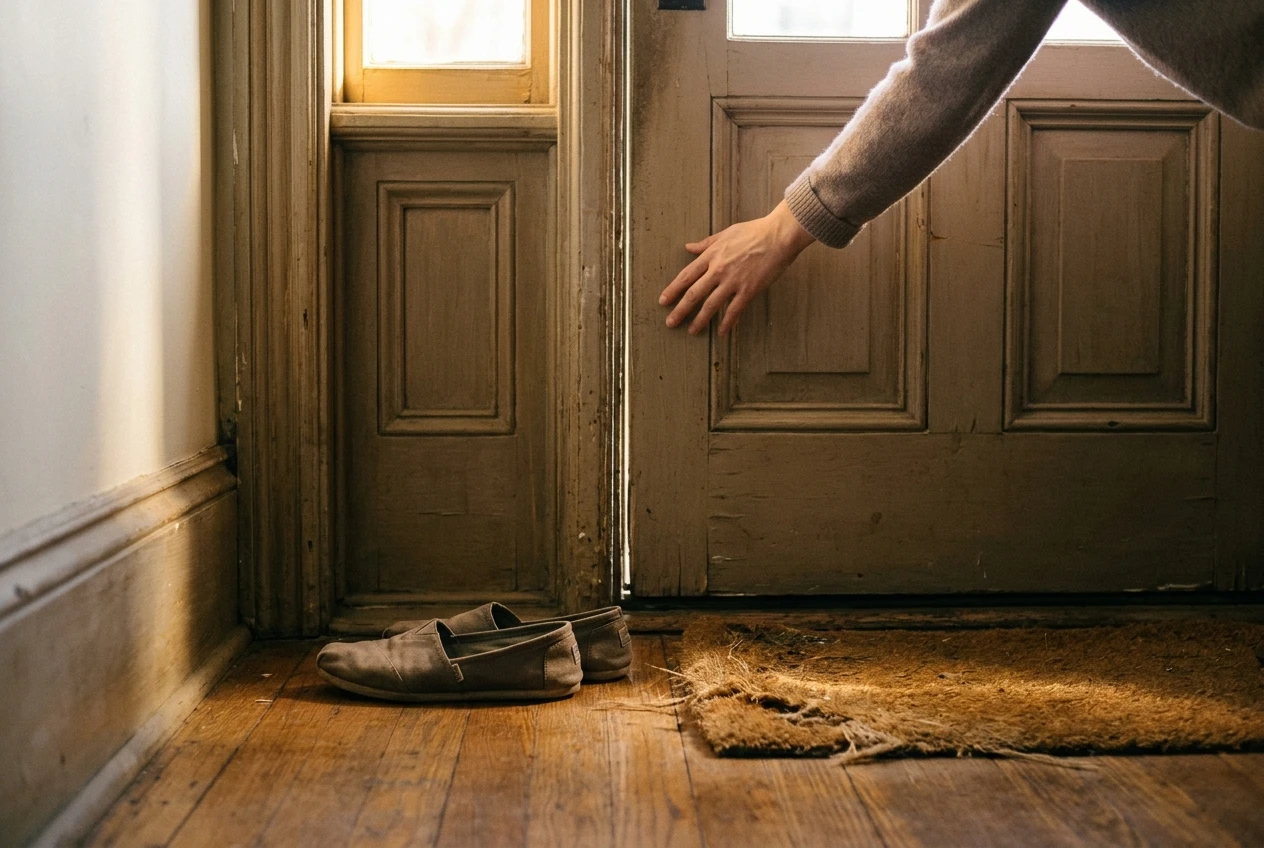
- Stand still for 30 seconds. Notice your toes and the edges of your feet. Do you feel the floor, or a layer between you and it?
- Shift your weight slowly from one foot to the other, five times each way. Can you tell when the weight has fully arrived on a foot? Note any pinching, rubbing or pressure on a joint.
- Rock gently from heel to toe and back. The shoe should move with you, not hold your foot rigid.
- Take three slow steps forward, placing each heel first and rolling onto the whole foot. Then take three steps backward. Note whether the shoe catches or slides.
- Compare with bare feet or socks if the floor allows. You want the shoes to keep most of what you felt before.
If a pair leaves you feeling much less than your bare feet did, or if any joint complains, try something else. Comfort in the first two minutes is a better guide than a promise on the box.
If your arches are flat or your joints ache: how to adjust without losing feedback
Sensitive feet and achy joints sometimes need more than a bare minimum shoe. The goal is to add support in small steps and check what you lose each time.
- Start with the thinnest change. If your arches feel tired, try a thin, flexible insole before moving to a thicker shoe. After each change, repeat the weight-shifting test and see whether you still feel the floor.
- Check the toe box again after adding an insole. An insole takes up room, and a shoe that fitted before may now press on your toes.
- Choose cushioning with care. Some soft cushioning can feel kind to sore knees or hips, but it also numbs feedback. A modest amount in a flat, flexible shoe is a better compromise than a high, springy sole.
- Pay attention to your knees. If a shoe change makes your knees ache during practice, the cause may be your stance or step width as much as your footwear. The article on five small adjustments that make Taiji kinder on sore knees covers the movement side.
If you have been given orthotics or specific advice by a podiatrist or physiotherapist, follow that advice and bring it to your Taiji practice. Do not remove supports they have prescribed because a guide recommends flat shoes.
Shoes for the hall, the park and the floor: matching footwear to where you practise
Where you practise changes what the shoe has to do.
In a hall or studio. Many venues ask for clean, indoor-only shoes or socks, so check before you go. A pair kept only for indoor use also keeps dirt and grit off polished floors, which helps your grip. Ask the teacher what the floor is like, as wood, vinyl and carpet each behave differently under a thin sole.
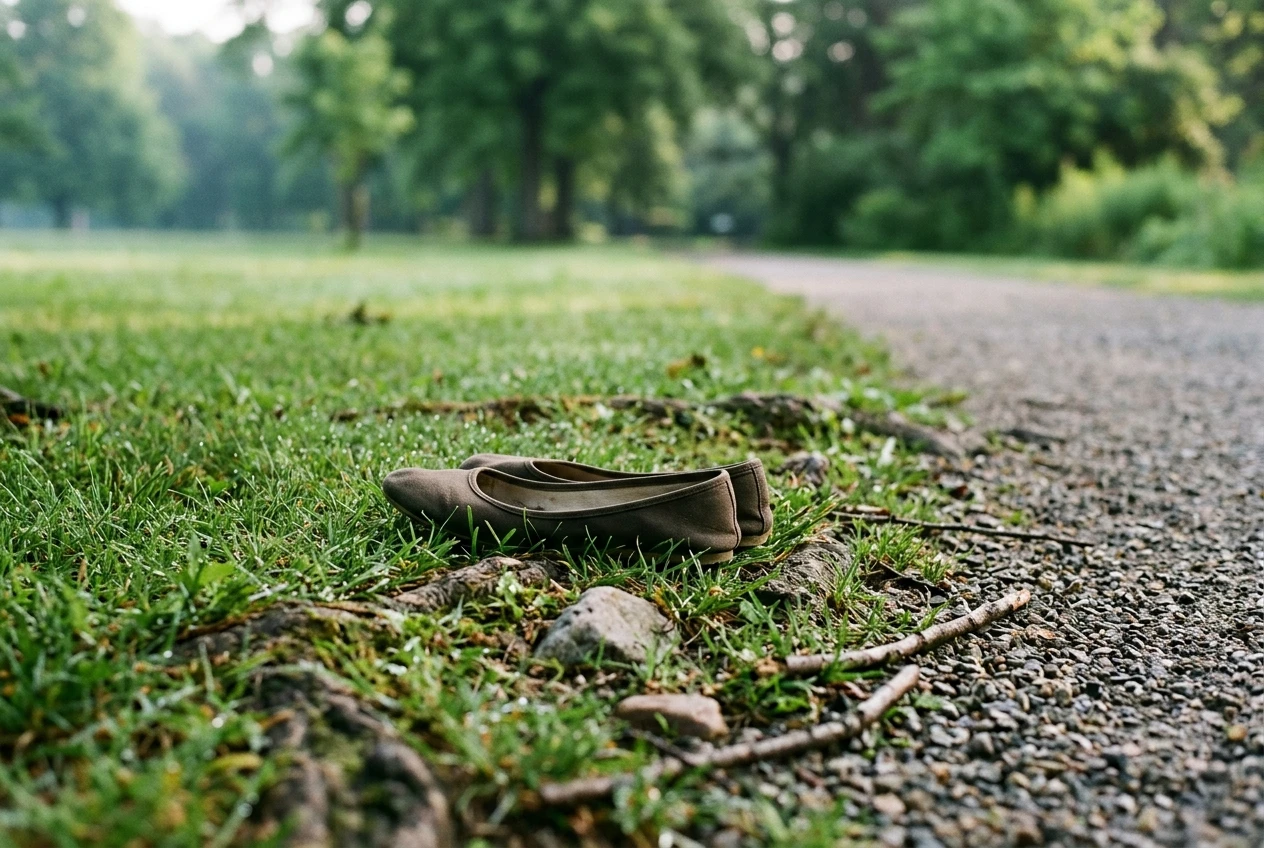
In the park. Grass and paths are uneven, and a thin sole can let small stones and roots through. A flat shoe with a slightly firmer, grippy sole is reasonable outdoors, as long as it still bends easily. Wet grass can be slippery, so look at the tread. Slow weight shifts on soft ground are also a good test of your balance, so take it gently.
At home on the floor. This is the easiest place to practise barefoot or in socks. If your floor is slippery, use a mat or grippy socks. Keep your practice shoes by the door if you prefer to wear them, and put them on for the same reason you would for a class: they signal the start of a session.
What shoes cannot do, and when to ask a teacher or a foot professional
A well-chosen shoe removes obstacles. It does not fix balance, strengthen weak ankles or cure joint pain, and no footwear can promise those results. How you stand and step matters at least as much as what is on your feet.
Ask a teacher if you are unsure whether your stance, step length or weight shift is causing discomfort. A teacher can watch you move in a way that no shop test can. If you are still choosing one, what a good first Taiji teacher actually does can help you know what to look for.
See a podiatrist, physiotherapist or doctor if you have persistent foot pain, numbness, swelling, a change in how you walk, frequent trips or falls, or a condition such as diabetes that affects the feet. They can examine you directly, which a general guide cannot.
One thing to try
Before you buy anything, stand for two minutes in whatever you currently wear for practice, whether that is shoes, socks or bare feet. Shift your weight slowly from one foot to the other, and notice what you can and cannot feel under each foot. Write it down in your practice journal; what to write in a Taiji and Qigong practice journal suggests how to keep those notes useful. When you want to go further into what your feet are telling you, where your weight really goes when you root in Taiji explains how that feeling connects to rooting.