
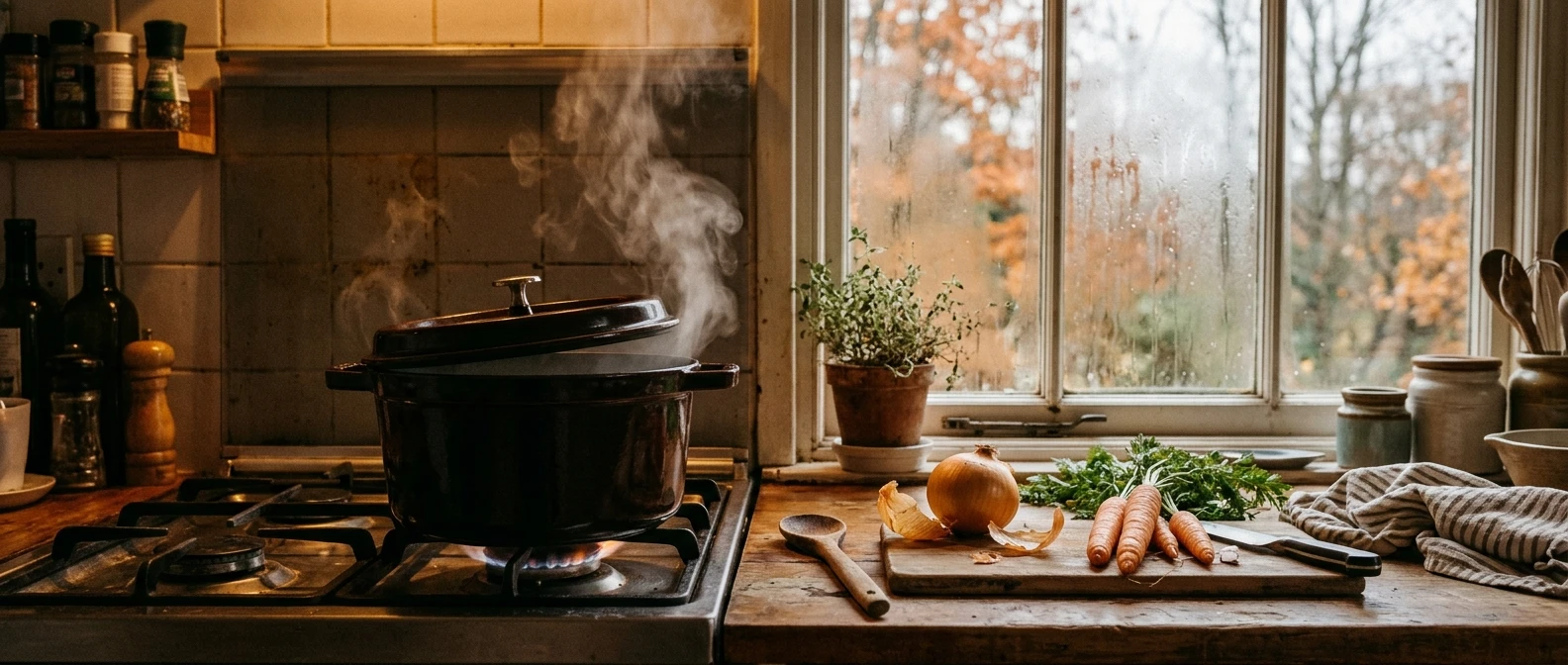
Autumn brings a particular kind of kitchen weather. The windows fog, the oven earns its keep, and a pot left on low heat for a few hours starts to seem like a reasonable use of an afternoon. If your knees complain on the stairs or your hands are slow to open in the morning, that pot can carry some hope with it: perhaps something in there will help the body repair itself.
This piece looks at that hope carefully. It covers which nutrients bones and joints depend on, how patient cooking with broth, greens, seeds, seaweed and beans can contribute to a diet rich in minerals for joint health, and where food stops being the answer. The aim is a habit you can keep for years, with no miracle claimed.
Why slow cooking appeals when your joints feel old before their time
Stiff joints tend to make people want to protect and nourish the body, and slow cooking suits that mood. It asks for little effort and a lot of time, which fits a body that moves best when it is not rushed. The cooking itself is gentle work: chopping an onion, rinsing beans, standing near a warm stove.
There is also a practical benefit. A household that makes one pot of soup or broth on a quiet day has meals ready for several days, which makes regular, varied eating easier than relying on whatever is quickest. Long-term mobility depends far more on what you eat across months than on any single bowl.
The rest of this article keeps one rule: say what is known, say what is not, and let the cooking be enjoyable without overpromising.
What the research actually says about broth, collagen and joints
Bone broth is often described as a joint food because bones, cartilage and tendons contain collagen, and simmering releases some of it as gelatin. The reasoning sounds neat: eat collagen, supply your cartilage with collagen. Digestion does not work that way. Dietary protein is broken into amino acids and small peptides, and the body decides where to use them. Nothing sends the collagen from your soup directly to your knee.
Studies of collagen supplements for joint pain, mostly in osteoarthritis, have produced mixed and generally modest results, and the Arthritis Foundation has described the evidence as limited. Research on homemade broth specifically is thinner still. The amount of collagen, protein and minerals in a pot varies a great deal with the bones used, the water, and the cooking time, so no one can promise what a given batch contains.
That leaves broth with a smaller but real role. It is a warm, hydrating, protein-containing food that many people find easy to eat when appetite is low, and it makes a good base for vegetables, beans and greens that supply nutrients with firmer evidence behind them. If you enjoy it, it is a good food. If someone tells you it will rebuild your cartilage, they are going beyond the research.
For a closer look at the related question of whether eating can change how joints feel from day to day, see what anti-inflammatory eating can and cannot do.
The minerals and nutrients your bones and joints quietly rely on
Cartilage, the smooth tissue that cushions a joint, is mostly collagen and water. Beneath it sits bone, and bone is where minerals matter most. The NIH Office of Dietary Supplements notes that the large majority of the body’s calcium is stored in bones and teeth, and that bone is continually broken down and rebuilt throughout life. That rebuilding needs a steady supply of several nutrients, not just one.
The main ones are:
- Calcium: the principal mineral in bone. Dairy foods are common sources, and so are canned fish eaten with the soft bones, tofu made with calcium salts, and some leafy greens.
- Magnesium: present in bone and involved in many body processes. Seeds, nuts, beans, whole grains and leafy greens are good sources, according to the NIH Office of Dietary Supplements.
- Vitamin D: helps the body absorb calcium. Few foods supply much of it, so sunlight, fortified foods, and sometimes supplements recommended by a doctor are part of the picture.
- Vitamin K: found in leafy greens and involved in the proteins bone uses.
- Vitamin C: needed to make collagen, and plentiful in fruit and vegetables.
- Protein: the framework of bone and the fuel for the muscles that support your joints.
Trace minerals such as zinc, copper and manganese also play roles, and they are found in beans, seeds, nuts and whole grains. A varied diet usually covers them without any special effort.
None of these is a joint remedy. They are the ordinary materials the body needs to maintain the bone under the cartilage and the muscle around the joint. A diet short on them for years can matter, and a diet that supplies them consistently supports the system without curing anything.
Beyond bones in a pot: greens, sesame, seaweed, beans and small fish
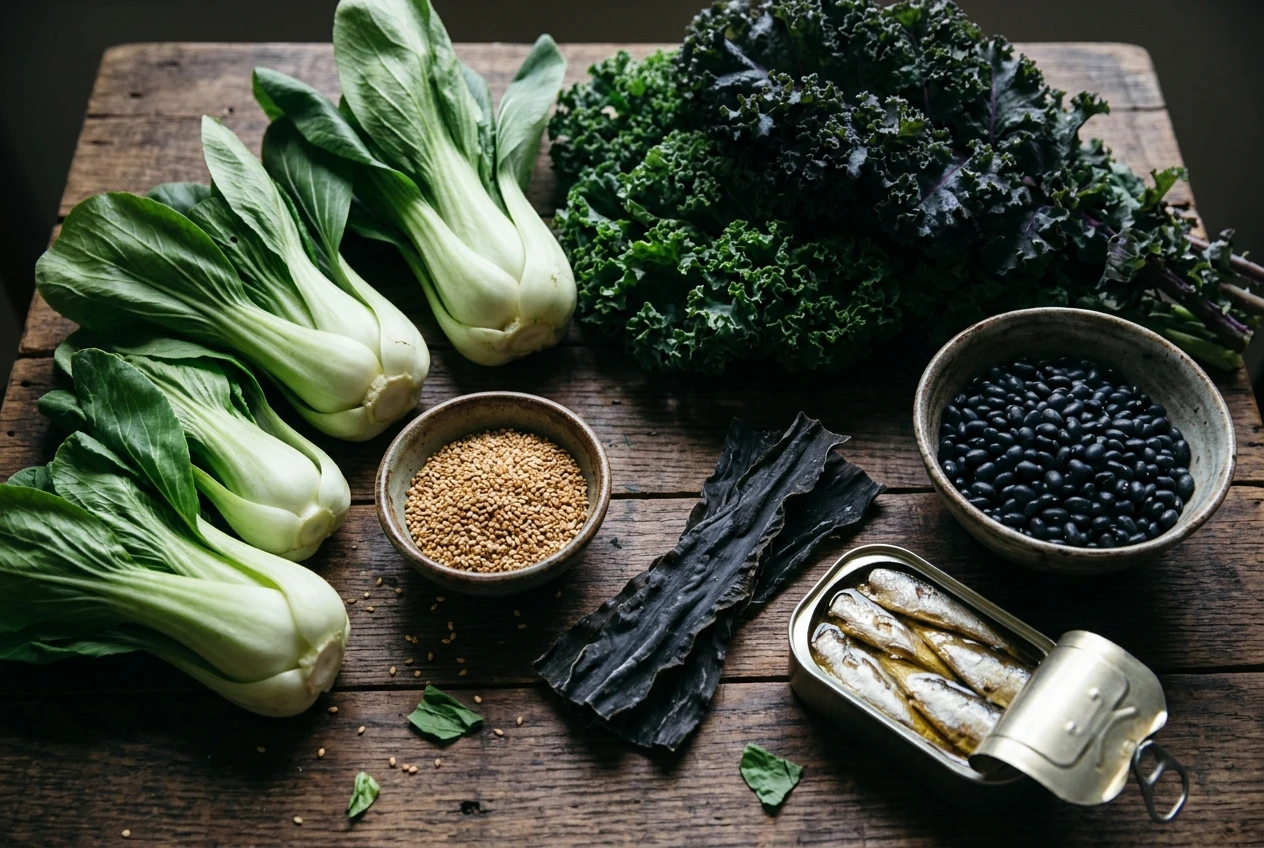
If broth is a modest contributor, the foods you put into it and beside it can do more of the work. This is where mineral rich foods for joint health become practical, because each one is easy to add to a pot.
Leafy greens
Kale, bok choy, collard greens and turnip greens provide calcium along with vitamin K and magnesium. The NIH Office of Dietary Supplements points out that spinach is high in calcium on paper but contains oxalates that limit how much the body absorbs, so it is better valued for other nutrients. Stir sturdy greens into a soup in the last ten minutes of cooking.
Sesame and other seeds
Sesame seeds, pumpkin seeds and sunflower seeds contribute magnesium, zinc and some calcium. Toast them lightly and grind or sprinkle them over a bowl of soup or rice. Tahini, a paste of ground sesame, stirs easily into broth or dressings.
Seaweed
Kombu, wakame and nori add flavour and some minerals. They also contain iodine, and the NIH Office of Dietary Supplements notes that the amount varies widely between seaweeds, with kelp products sometimes supplying very large amounts. Too much iodine can disturb thyroid function, so a small piece of kombu in a pot is sensible, and a daily heap is not. If you have a thyroid condition, ask your doctor before making seaweed a regular food.
Beans and lentils
Beans supply magnesium, protein, fibre and trace minerals, and they cook very well alongside a long simmer. Cook them until fully tender, and follow the packet instructions for dried kidney beans in particular, which need proper boiling to be safe.
Small fish with soft bones
Canned sardines and canned salmon eaten with their bones are among the better food sources of calcium listed by the NIH Office of Dietary Supplements. Mashed into a soup or stirred through beans and greens, they add richness without any long cooking.
One caution on vitamin K: people taking warfarin are usually advised to keep their intake of leafy greens steady rather than swinging between lots and none. If that is you, talk to your doctor or pharmacist before changing how much you eat.
How Chinese food energetics links kidneys, bones and slow winter cooking
Traditional Chinese medicine describes the body in a different language from nutrition science, and it is worth knowing that language without confusing the two. In that tradition, the kidneys govern the bones, and the kidney system is linked with winter, with cold, and with storing rather than spending energy. Bones, joints, the lower back and the knees are all considered part of that territory.
From this view come traditional food habits: black beans, black sesame, seaweed, bone broths and other dark or deeply flavoured foods are favoured in colder months, and cooking is slow and warming rather than raw and cooling. These associations come from a long tradition of observation and not from laboratory trials, and they should not be treated as proven treatments.
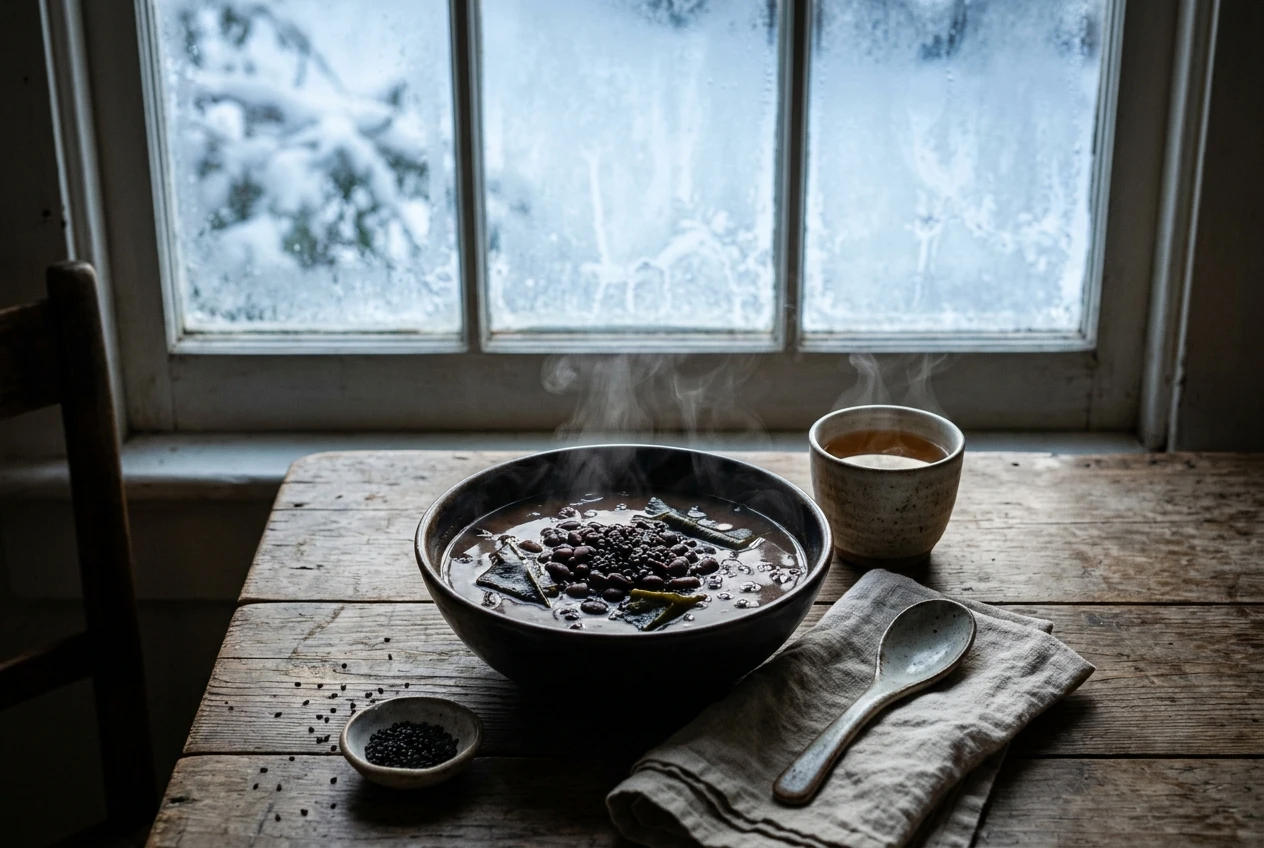
Used as a lens, though, they offer something useful. They suggest that the cold months are a time to eat warm, cooked, mineral-containing food and to rest more, and that fits with what nutrition science would also recommend for most people. If you want the practice side of this idea, a gentle Qigong practice for kidney Qi in winter pairs well with the kitchen, and building a warming winter plate shows how to put these foods together in one meal.
A seasonal rhythm for mineral-rich cooking, from autumn to winter
Seasonal eating gives the habit a shape, so you are not trying to remember a long nutrient list. A simple pattern is enough.
Autumn. Start with root vegetables, cooked greens, mushrooms, beans and the first slow soups. Autumn is a good time to build the habit while the weather still allows walks and fresh produce is plentiful. Make a pot once a week and see what you enjoy.
Early winter. Move towards longer simmering and heavier pots. Bring in black beans, black sesame, small amounts of seaweed, and bone broth if you eat meat. Keep the cooked greens going, because they are the most reliable calcium and vitamin K source on this list.
Deep winter. Eat warm meals at regular times, keep a jar of toasted sesame seeds by the stove, and keep a few cans of sardines or salmon in the cupboard for days when you do not feel like cooking. Fewer fresh options do not mean fewer minerals.
If you want to notice how the changing weather affects your own joints before you decide what is food-related and what is not, a two-week way to check your own can help you separate the two.
Where food stops and the rest of the picture begins
Food supports bone and muscle, and it does not replace the other things joints need. Three of them deserve a plain mention.
Movement. Joints stay healthier with regular, moderate use, and the muscles around them need to be worked to stay strong. The Arthritis Foundation lists gentle movement such as walking, swimming and tai chi among the recommended activities for people with arthritis. Practices that train balance also reduce the risk of falls, which matters for bones as much as any mineral does. Balance matters more than flexibility in Taiji Quan, and that is worth reading if you are starting out.
Your doctor. Joint pain that is new, swollen, hot, worsening, or that wakes you at night needs a proper assessment. So do questions about bone density, especially after menopause or if osteoporosis runs in your family. A doctor can also tell you whether a supplement is appropriate. The NIH Office of Dietary Supplements is clear that more is not always better with minerals, and high doses can cause problems.
Existing conditions. Anyone with kidney disease, thyroid problems, or who takes medicines such as warfarin should ask a doctor or dietitian before changing the amount of greens, seaweed or mineral-rich foods they eat.
Food is one part of a long-term plan that also includes movement, sleep, a healthy weight where relevant, and medical care. It does its part best when nothing is asked of it that it cannot deliver.
One simple pot to simmer this week
This recipe has two versions, and neither needs special skill. Quantities are loose on purpose.
Bone broth version. Put the bones from a roast chicken, or a few beef bones, in a large pot with about two litres of water, a splash of apple cider vinegar, a roughly chopped onion, a carrot, a stalk of celery and a few slices of fresh ginger. Bring it to a boil, then lower the heat until it barely bubbles. Simmer gently for several hours, skimming any foam from the top. Strain, cool quickly, refrigerate, and use within three to four days, or freeze portions.
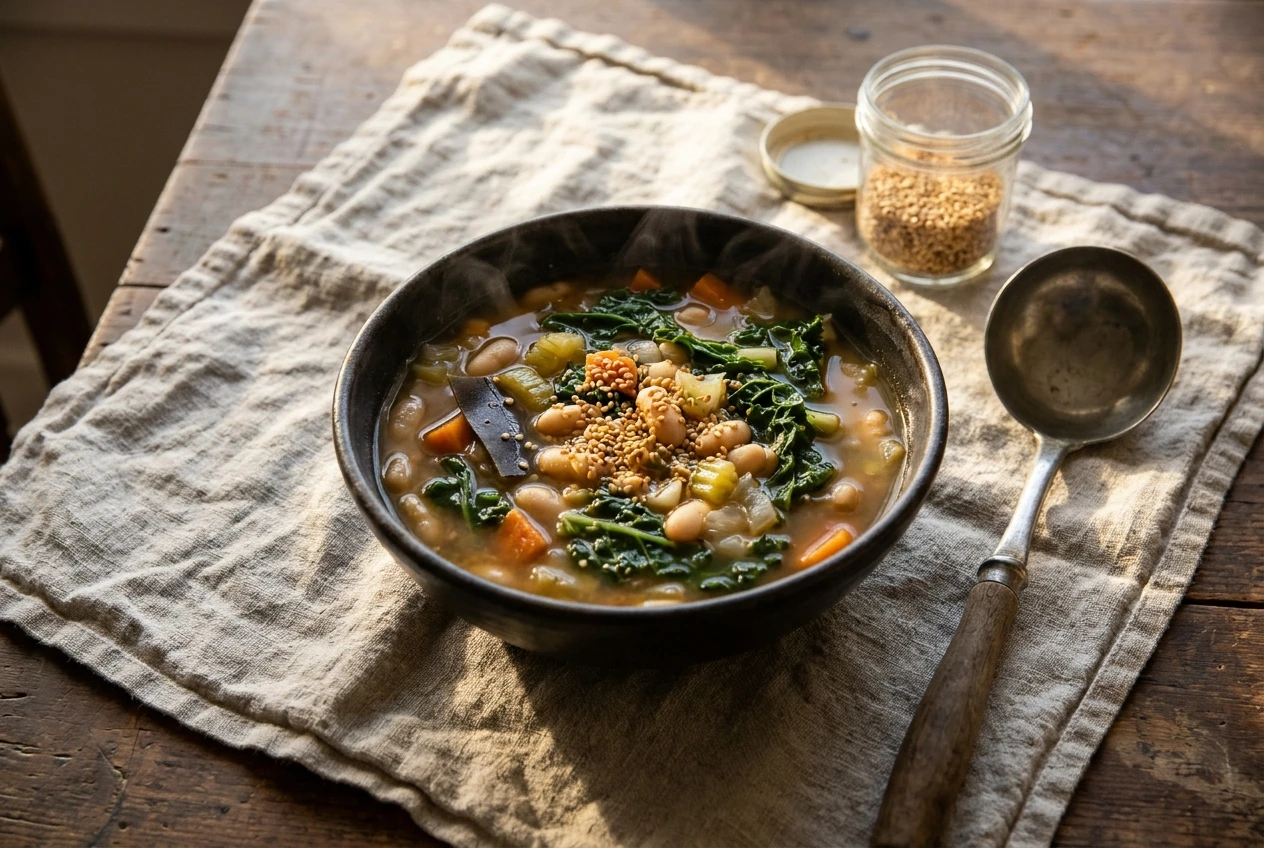
Vegetable and bean version. Soften an onion and some ginger in a little oil, add a piece of kombu about the size of a postage stamp, a cup or two of cooked black beans or white beans, chopped carrot, and enough water or stock to cover. Simmer until the vegetables are tender, then stir in chopped kale or bok choy for the last ten minutes. Finish each bowl with toasted sesame seeds.
Either version makes several servings. Eat it over a few days alongside your usual meals, and keep your regular movement going.
Your one thing to try
This week, simmer a single pot of broth or a mineral-rich vegetable and bean soup. Over the following days, note in your practice journal how you feel: your energy, your appetite, your sleep, and how your joints feel in the morning and after practice. Small changes in food are slow to show, so a few lines each day will tell you more than memory will. If you are not sure what to record, what to write in a Taiji and Qigong practice journal gives a simple structure.
If you would like to go deeper into food energetics or mindful eating, a well-regarded book on either subject can be a useful companion, offering seasonal recipes and a fuller explanation of the traditional ideas than one article can. It is worth reading only if the subject interests you. The pot of soup is enough to start with.