
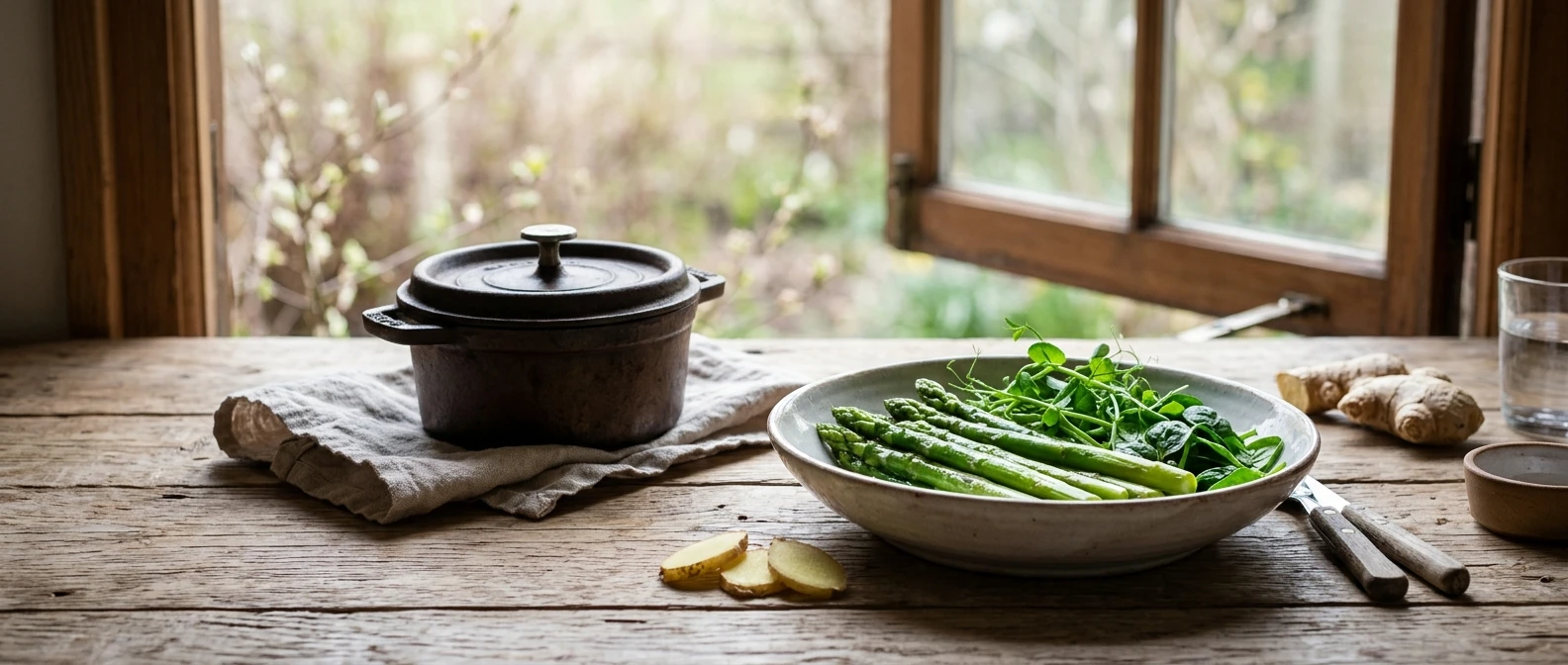
As the days lengthen, the heavy stews, roasts and long-baked dishes that suit a cold month can start to feel out of step with the weather. Spring eating for joint health is a gentle seasonal shift: more fresh greens, shorter cooking times, a lighter plate. It does not require a cleanse, a juice fast or any promise about what food does inside your joints.
If your winter plate followed the approach in a simple way to build a warming winter plate, this is the next season of the same idea. The goal is the same too: eat in a way that suits the time of year and leaves your body comfortable.
Why “detox” is the wrong word, and what your liver and kidneys already do
Spring food is often sold as a detox. The word promises something food cannot deliver, so it is worth setting aside.
Your liver processes what you absorb from food and drink and breaks down many substances. Your kidneys filter your blood and send waste out in urine. Both organs work around the clock in a healthy body, without a special diet to start them.
The US National Center for Complementary and Integrative Health (NCCIH) has a page, “Detoxes and Cleanses: What You Need To Know”, which says there is little evidence that detox diets remove toxins from the body or improve health. Nothing on a plate “cleanses” a joint either. Stiffness in the knees, hands or hips has causes such as wear in the joint, inflammation, or reduced movement over a cold season, and a few days of green juice does not address those.
That leaves a more modest idea, and it is the one this article uses. Food energetics, the tradition behind Taiji and Qigong nutrition, talks about lightening and refreshing the diet in spring. It is a seasonal way of choosing food, not a claim about toxins.
What food energetics means by spring: lighter, fresher, gently rising
In Chinese medicine’s seasonal framework, spring belongs to the Wood element and is linked with the liver. The image for the season is growth: things rising, loosening and turning green after a period of storage.
Winter food follows the opposite direction. It is warm, dense, slow-cooked and often salty or rich, which suits a season of conserving energy. Spring food moves the other way. It is fresher, greener, quicker to cook and lighter on the stomach.
This is a framework for choosing food, not a laboratory finding. The tradition does not measure “Wood energy” in a blood test, and it is fair to treat it as a way of organising habits rather than as proof of anything. What it offers in practice is useful: a reason to eat more vegetables, cook them more briefly, and move away from the heaviest dishes as the weather warms.
The words to hold onto from this tradition are lighter, fresher and gently rising. They describe a direction for your meals, not a strict diet.
Spring greens worth putting on your plate, and how to choose them
What counts as a spring green depends on where you live. These are common choices to look for at a market or in a garden:

- Tender leaves: young spinach, baby chard, young kale, pea shoots and lettuces.
- Pleasantly bitter greens: dandelion leaves, rocket (arugula), watercress and mustard greens. Traditional food energetics values a little bitterness in spring.
- Spring stems and shoots: asparagus, spring onions, chives and fresh herbs.
- Foraged or market nettles: these sting until cooked, so wear gloves to handle them. Cook them before eating.
When you shop, pick leaves with a deep, even colour, a crisp feel and no yellowing, sliminess or wilting. Smaller, younger leaves are usually milder, which helps if you are new to bitter greens. A mix of one mild and one bitter green in the same dish is an easy way to start.
Two practical cautions apply. Leafy greens are rich in vitamin K, and the NIH Office of Dietary Supplements notes that people taking warfarin need to keep their vitamin K intake consistent. If you take a blood thinner, talk with your doctor or pharmacist before making a large change. Spinach and chard are also high in oxalates, so anyone with a history of kidney stones should ask their doctor whether to limit them.
Lighter cooking methods that keep food gentle on digestion
Winter cooking tends to be long and slow: braises, roasts, soups that simmer for hours. Spring greens do not need that, and long cooking turns them dull and soft. Short cooking keeps colour and texture and is easy on the stomach.
Quick steaming. Put a handful of greens over simmering water, cover, and steam for two to four minutes, until the colour turns bright. Tough stems like asparagus need a little longer than leaves. Finish with a few drops of oil or a squeeze of lemon.
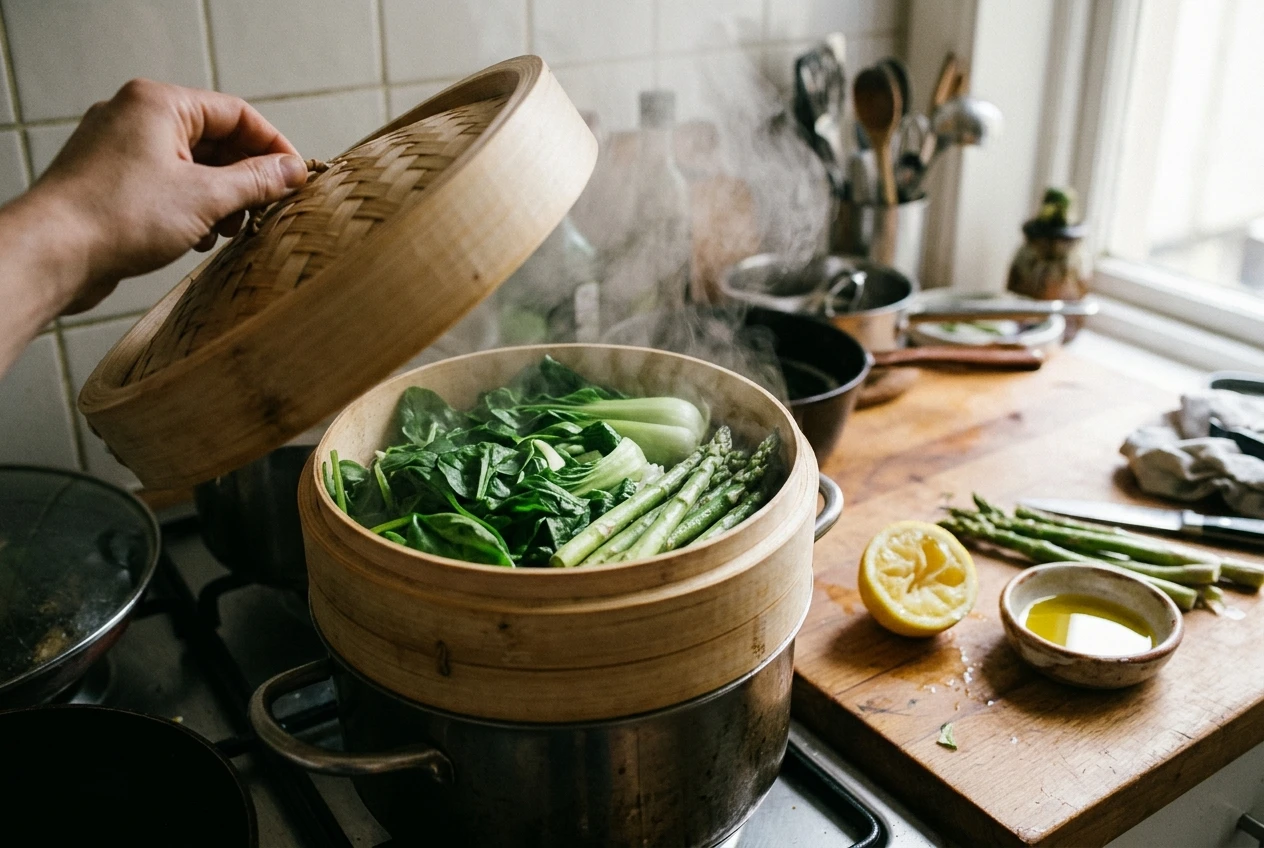
Gentle sautéing. Warm a small amount of oil in a pan over medium heat, add sliced fresh ginger or spring onion for a minute, then add the greens and stir for one to three minutes. Medium heat keeps the food from browning hard or scorching the oil.
Brief blanching. Drop greens in boiling water for under a minute, drain, and use in a salad or alongside rice. This takes the edge off bitter leaves.
Short soups. A light broth with greens added in the last minute or two gives you a warm meal without the heaviness of a winter stew.
Food energetics also treats very cold, raw food with caution when digestion feels weak. A bowl of raw salad straight from the fridge may not suit everyone. If raw leaves leave you bloated, lightly cooked greens are a reasonable middle ground. If digestion and joint stiffness seem linked for you, a food energetics view of digestion and recovery explores that connection further.
A spring plate for stiff joints, built one swap at a time
A sudden overhaul is hard to keep up. Swapping one item at a time is easier on your routine and on your digestion, and it lets you notice what actually suits you.
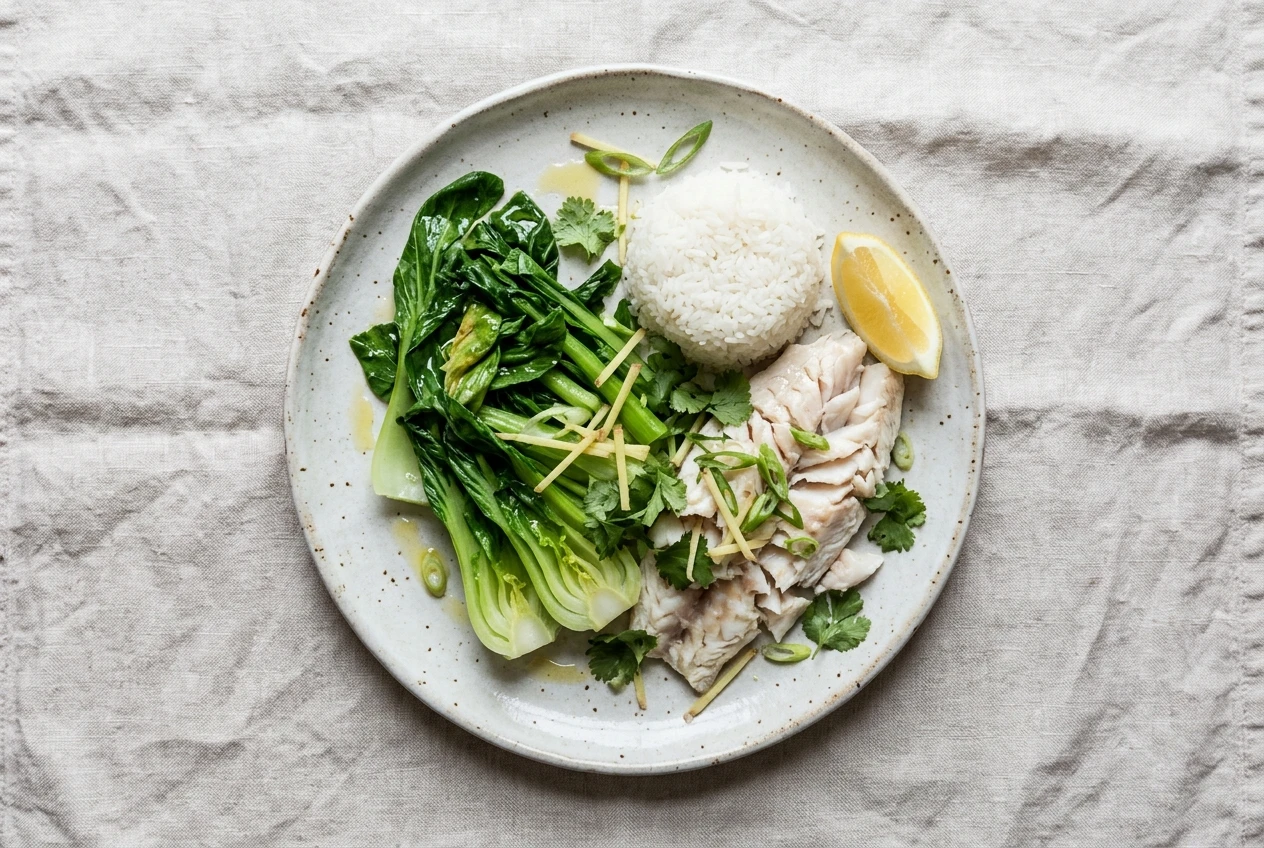
A simple spring plate has three parts:
- A generous portion of lightly cooked greens. Aim for roughly half the plate.
- A simple protein. Eggs, fish, tofu, beans or a small portion of chicken all work, cooked gently.
- A modest portion of grain or starch. Rice, oats, millet or a small potato keep the meal satisfying.
Then add flavour with fresh ginger, herbs, lemon or a little vinegar.
Some swaps to try, one per week:
- Replace a heavy stew with a steamed-greens-and-fish dinner.
- Replace a long-roasted vegetable tray with asparagus or peas steamed for a few minutes.
- Replace heavy cream-based sauces with lemon, olive oil and herbs.
- Replace a mid-afternoon biscuit with a small bowl of miso or vegetable broth.
- Add a handful of chopped herbs to whatever you already cook.
Keep the warm element. Spring does not mean ice-cold smoothies or only salads. Ginger, warm broths and cooked vegetables keep the meal comfortable while it gets lighter.
What this can and cannot do for your joints, and when to talk to your doctor
Eating more vegetables, including leafy greens, fits the general advice of the Arthritis Foundation and similar organisations: a diet rich in vegetables, fruit, whole grains, fish and olive oil is a sensible pattern for people with joint conditions. That is a pattern of eating, not a specific spring protocol, and no study shows that a seasonal change to steamed greens treats stiff joints.
What a lighter spring plate can reasonably do is help you eat more vegetables, feel less weighed down after meals, and support a healthy weight if that is a goal. Carrying less weight reduces load on the knees and hips, according to the Arthritis Foundation. For a fuller look at the limits of food, read what anti-inflammatory eating can and cannot do for joints.
Fresh ginger is a common addition. The NCCIH summarises the research on ginger, and the evidence for joint pain is limited and mixed. Treat it as a flavourful, warming ingredient and not as a treatment.
Please talk with your doctor if:
- a joint becomes hot, red or visibly swollen,
- morning stiffness lasts longer than about half an hour,
- pain wakes you at night or keeps getting worse,
- you take blood thinners, have kidney disease, diabetes or another condition that affects what you should eat.
None of these are things a change of food should be asked to manage on its own.
Pairing the plate with a gentle spring Qigong practice
In the same seasonal tradition, spring food and spring movement go together. Qigong practice for this season tends to emphasise stretching, opening and reaching upward, which loosens a body that spent winter conserving energy.
If you would like to pair your plate with movement, three gentle Qigong movements for liver Qi in spring is a good place to start. The movements are slow and low-impact, so they suit stiff joints. Doing them before or well after a meal is more comfortable than straight after eating.
Like the plate, the practice works best when it stays small. Five minutes of gentle movement on most days beats a long session you abandon after a week.
One thing to try this week
Replace one heavy dinner with a handful of lightly steamed spring greens, a little fresh ginger and a simple protein. Steam the greens for two to four minutes, slice the ginger thinly, and cook the protein the way you usually do.
Then, the next morning, note in your practice journal how your body feels: stiffness on waking, how easily you moved, how your digestion felt. If you are unsure what to record, this guide to what to write in a Taiji and Qigong practice journal will help. One dinner will not tell you much, but a few weeks of notes will show you what suits your body.